Pharmacist
1 - 17 of 17 results
-
Cleveland Clinic Artificial Intelligence Summit
As artificial intelligence drives profound changes across the healthcare landscape, it is imperative for all providers, administrators and educators to utilize these innovations to deliver the best possible care. Cleveland Clinic’s Artificial Intelligence Summit presents North America’s leading minds in healthcare AI, with discussions designed to engage professionals at all levels of technological expertise. This exploration of AI’s impact and challenges for healthcare professionals is worth 8.5 AMA PRA Category I Credits™, with accreditation provided for nurses, PAs and pharmacists as well!
See full details chevron_right- Cost: $295
- Credit hours: 8.5
- Format: On-Demand Online
- Material last updated: September 10, 2025
- Expiration of CME credit: September 9, 2027
-
StatPearls Unlimited Pharmacist CE
Stay on top of your game with the StatPearls Pharmacist Unlimited CE programs. Your membership allows you unlimited access to 3,290 activities. These Pub-Med Indexed articles are categorized into 15 specialty areas which lets you better access activities that will make the biggest impact on your practice. One subscription allows access to all the activities, including all state-requirements.
Pricing Options
- 6 Month subscription: All 3,393 CE Activities – $59 per 6 months
- Annual subscription: All 3,393 CE Activities – $79 per 1 year
- Cost: 6 months for $59, 1 year for $79
- CME credits awarded by: AKH
- Format: On Demand Online & Board Reviews
-
Cleveland Clinic 29th Annual Diabetes Therapeutics, Technology and Surgery
Cleveland Clinic’s world class faculty has designed the 29th Annual Diabetes Therapeutics, Technology and Surgery to provide up-to-date reviews of relevant research and treatment strategies for Type 1 and 2 diabetes. Participation should increase practitioners’ competence and clinical performance treatment of diabetes and its complications, which should lead to better patient outcomes. Physicians, diabetes educators, nurses, nurse practitioners, pharmacists and physician assistants will all benefit from the lessons learned throughout this activity. Worth 7 AMA PRA Category I Credits™. Accreditation also provided by the ANCC, AAPA and ACPE with NO POST TEST. Additionally, physicians can earn up to 7 ABIM MOC points for this activity.
See full details chevron_right- Cost: $99
- Credit hours: 7
- Format: On-Demand Online
- Material last updated: July 15, 2025
- Expiration of CME credit: July 14, 2027
-
Cleveland Clinic Future of Stroke Care
Cleveland Clinic’s Future of Stroke Care provides a comprehensive exploration of cerebrovascular disease and details the latest updates in management. An expert, multidisciplinary faculty focuses on improving patient outcomes through collaboration and integration of innovative practices in stroke care. Artificial intelligence’s role in stroke prevention and diagnoses is a key area of emphasis, with presentations designed to benefit all healthcare providers involved in treatment.
See full details chevron_right- Cost: $495
- Credit hours: 12.5
- CME credits awarded by: Cleveland Clinic Center for Continuing Education
- Format: On-Demand Online
- Material last updated: 12/22/2025
- Expiration of CME credit: 12/21/2027
-
AchieveCE Paths Forward for Diversity, Equity, and Inclusion in Healthcare
Notable disparities are present both with regard to individuals in the healthcare profession as well as in the delivery of healthcare to the patient population. Increasing awareness of the importance of diversity, equity, and inclusion is important for expanding access to high quality healthcare.
This presentation will be designed to introduce the audience to an important national level dialogue on the concepts of diversity, equity, and inclusion. Additionally, this topic will be tailored to understanding how DEI relates to healthcare practice and note specific steps the profession is taking to improve DEI at an organizational level.
See full details chevron_right- Cost: $50
- Credit hours: 1.5
- Format: Online Video
- Material last updated: 07/28/2024
- Expiration of CME credit: 07/28/2027
-
AchieveCE The Opioid Epidemic: Searching for Solutions Webcast
According to the 2015 National Survey on Drug Use and Health, approximately 3.8 million people (1.4% of those ages 12 or older) reported misusing prescription pain relievers, while another 329,000 people reported using heroin. Within the same year, 52,404 lethal overdoses took place, making drug overdose the leading cause of accidental death within the United States. Stancliff et al estimated that as of 2012, approximately 80% of people dependent on heroin or prescription opioids were not engaged in any treatment and many in treatment do not use the most effective medication-assisted treatments available to them.
Despite recent increased awareness of opioid use disorder (OUD) and efforts to improve access to care, several barriers to treatment still exist, including financial, geographic, regulatory, and social. In 2012, only 2.2% of physicians in the United States obtained waivers to prescribe buprenorphine for the treatment of OUD. Of those who received waivers, 41.6% were psychiatrists. This may be perceived as a potential barrier to OUD treatment as patients are often resistant to referrals to psychiatric and/or addiction clinics given the stigmas commonly surrounding addiction and mental health. Furthermore, physicians with waivers were found to practice primarily in urban settings, leaving a large portion of the rural population without access to buprenorphine treatment.
With all this in mind, education is needed in regards to current and emerging treatment options for OUD available to multiple patient populations. Also, with the deaths due to drug overdoses still elevated, education on how to recognize and reverse an opioid overdose is needed.
This presentation will address the above needs by discussing the science behind opioid use disorder as well as reflect upon current statistics associated with its impact on the United States. During the discussion, opioid overdose risks will be discussed and participants will be able to practice recognizing key symptoms of an overdose situation. Steps of using naloxone will be discussed and connected to how to appropriately seek out treatment for maintenance of opioid use disorder. Finally, new buprenorphine products and the potential role of naltrexone will be applied to this stigmatized population.
See full details chevron_right- Cost: $15
- Credit hours: 1
- CME credits awarded by: Continuing Education Company, Inc. and AchieveCE, ACPE, AGD PACE, and ANCC
- Format: Online Video
- Material last updated: 07/31/2024
- Expiration of CME credit: 07/31/2027
-
AchieveCE Just Say Know: A Review of Illicit Substances
Countless patients choose to ingest illicit substances while also utilizing prescription medications, and as healthcare professionals, we are left with barely any education on these substances. More education is needed in order to actually provide tangible life-saving, or at least life-improving, patient education.
Forget polypharmacy, what about poly substance abuse? Every 7 minutes an American dies of a drug overdose, propelling pharmacists to expand our knowledge on illicit substances. We humans have always aimed to experience the amplified effects of natural and synthetic substances that produce euphoria. The line between clinical and criminal utilization of substances if often blurred. In our society today, we have a very “objective” classification of substances based on generally accepted medical use and a respective propensity to become habit forming. However, as one can recall with the substance of ethyl alcohol (i.e., beer, wine, and hard liquor), a substance may never actually chemically change, yet can move across legal classifications of substances. How does that happen? Well, join our discussion on illicit substances to learn how numerous illicit substances have similar, if not the same, mechanisms of action as legal prescription medications readily available today. The time has come (Just Say NOW) to progress from “Just Say No” to “Just Say Know”!
See full details chevron_right- Cost: $25
- Format: Live Online Meeting
- Material last updated: 04/05/2025
- Expiration of CME credit: 04/05/2028
-
AudioDigest CME Clinical Guidelines and Updates Topical Collection
A new, comprehensive resource designed to support clinicians across all specialties. Whether you’re treating heart disease, infectious illnesses, or managing preventive care, this collection offers a unique blend of pharmacology updates and lifestyle intervention strategies. With topics ranging from pediatric obesity to hyperbilirubinemia in newborns, and from cell therapy to adult and adolescent vaccinations, Clinical Guidelines & Updates Topical Collection equips you with practical insights that can be applied directly to everyday care.
See full details chevron_right- Cost: $399
- Credit hours: 32.5
- CME credits awarded by: Accreditation Council for Continuing Medical Education
- Format: Audio
-
Cleveland Clinic 3rd Annual Primary Care +
Cleveland Clinic’s 3rd Annual Primary Care + provides critical updates in key treatment areas for primary care, women’s health and behavioral medicine. An expert faculty presents the latest information on common chronic diseases, reviews the most salient research publications and discusses new medical management strategies. Physicians, nurses, physician assistants and pharmacists will all benefit from this detailed review of best practices in primary care.
See full details chevron_right- Cost: $645
- Credit hours: 17.5
- CME credits awarded by: Cleveland Clinic Center for Continuing Education
- Format: On-Demand Online
- Material last updated: 12/15/25
- Expiration of CME credit: 12/14/27
-
SkinBonesCME – Pain Management, Pharmacology & Prescribing
Can medical cannabis and opioids complement or challenge each other in modern pain care? How do you manage acute and chronic pain in primary care? These topics, and many others, will be explored during this Pain Management CME course.
See full details chevron_right- Cost: $147
- Credit hours: Up to 6.75 CME & 3.50 APRN Pharmacology Credits
- CME credits awarded by: Jointly Provided by the Postgraduate Institute for Medicine & Skin, Bones, Hearts & Private Parts (a subsidiary of Dillehay Management Group)
- Format: On-Demand Online
- Expiration of CME credit: 2 years after product release
-
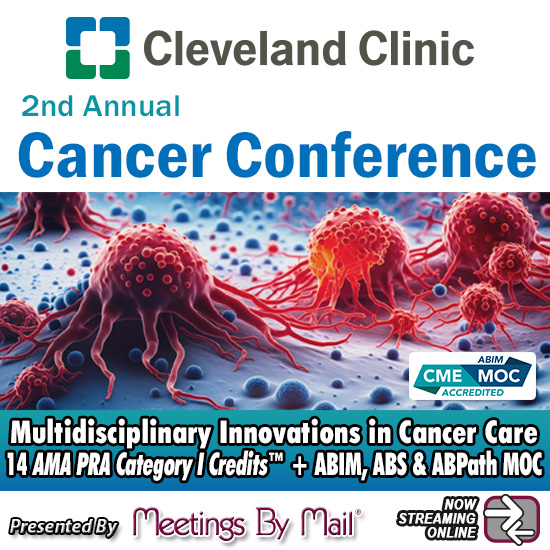
Cleveland Clinic 2nd Annual Cancer Care Conference
The 2nd Annual Cleveland Clinic Cancer Conference features the latest advances in the diagnosis and management of the most prevalent cancers at all stages of disease and treatment. A world-renowned faculty provide disease specific, evidence-based, practical presentations representing a variety of medical disciplines. This includes current and future strategies for cancer care, while detailing the role of emerging technologies, support and non-pharmacologic therapeutics for the cancer patient.
See full details chevron_right- Cost: $495
- Credit hours: 14 AMA PRA Category 1 Credits™
- CME credits awarded by: Cleveland Clinic Foundation Center for Continuing Education
- Format: On-Demand Online
- Material last updated: 3/2/2026
- Expiration of CME credit: 3/1/2028
-
SAVE 10% WITH CODE CMELIST10
Virginia Medical Cannabis Program Course Bundle – TheAnswerPage
Designed for today’s clinical environment, this course bridges the gap between cannabis science and patient care. It provides a clear, evidence-based foundation to help clinicians confidently counsel patients on cannabis use, evaluate therapeutic applications, and recognize risks. Key topics include how cannabinoids work in the body, cannabinoid pharmacology, clinical effects, risks and contraindications of cannabis use, and cannabis-related disorders. A state-specific module is also included in this bundle.
See full details chevron_right- Cost: $189
- Credit hours: 4 CME/CE credits for doctors, nurses, NPs and pharmacists.
- CME credits awarded by: ACCME – AMA PRA Category 1 Credits™, ACPE, ANCC
- Format: On-Demand Online
- Material last updated: 4/22/2026
- Expiration of CME credit: 4/22/2028
-
SAVE 10% WITH CODE CMELIST10
Cannabis and Cannabinoids in Clinical Practice – TheAnswerPage
Designed for today’s clinical environment, this course bridges the gap between cannabis science and patient care. It provides a clear, evidence based foundation to help clinicians confidently counsel patients on cannabis use, evaluate therapeutic applications, and recognize risks. Key topics include how cannabinoids work in the body, cannabinoid pharmacology, clinical effects, risks and contraindications of cannabis use, and cannabis-related disorders.
See full details chevron_right- Cost: $179
- Credit hours: 4 CME/CE credits for doctors, nurses, NPs and pharmacists.
- CME credits awarded by: ACCME – AMA PRA Category 1 Credits™, ACPE, ANCC
- Format: On Demand Online
- Material last updated: 4/22/2026
- Expiration of CME credit: 4/22/2028
-
SAVE 10% WITH CODE CMELIST10
Cannabis Medicine: A Comprehensive Clinical Guide – TheAnswerPage
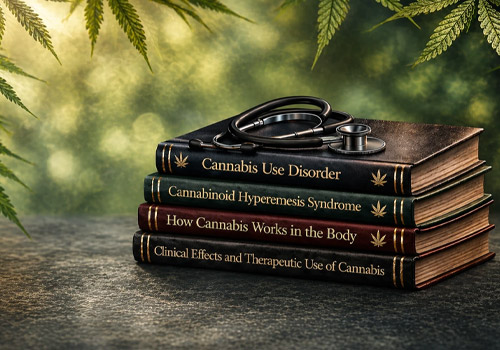
This course bundle is comprised of 2 courses: “Cannabis and Cannabinoids in Clinical Practice” and “Cannabis Use Disorder and Cannabinoid Hyperemesis Syndrome.” Designed for today’s clinical environment, “Cannabis and Cannabinoids in Clinical Practice” bridges the gap between cannabis science and patient care. It provides a clear, evidence based foundation to help clinicians confidently counsel patients on cannabis use, evaluate therapeutic applications, and recognize risks. Key topics include how cannabinoids work in the body, cannabinoid pharmacology, clinical effects, risks and contraindications of cannabis use, and cannabis-related disorders. “Cannabis Use Disorder and Cannabinoid Hyperemesis Syndrome” covers presentation, diagnostic criteria, screening tools, cannabis withdrawal, treatment strategies, and management of recurrent nausea and vomiting. Key concepts are introduced and reinforced through clinically relevant case scenarios.
See full details chevron_right- Cost: $239
- Credit hours: 6 CME/CE credits for doctors, nurses, NPs and pharmacists.
- CME credits awarded by: ACCME – AMA PRA Category 1 Credits™, ACPE, ANCC
- Format: On-Demand Online
- Material last updated: 4/22/2026
- Expiration of CME credit: 4/22/2028
-
SAVE 10% WITH CODE CMELIST10
Cannabis Use Disorder and Cannabinoid Hyperemesis Syndrome – TheAnswerPage
“Cannabis Use Disorder and Cannabinoid Hyperemesis Syndrome” covers presentation, diagnostic criteria, screening tools, cannabis withdrawal, treatment strategies, and management of recurrent nausea and vomiting. Key concepts are introduced and reinforced through clinically relevant case scenarios.
See full details chevron_right- Cost: $125
- Credit hours: 2 CME/CE credits for doctors, nurses, NPs and pharmacists.
- CME credits awarded by: ACCME – AMA PRA Category 1 Credits™, ACPE, ANCC
- Format: On-Demand Online
- Material last updated: 5/6/2026
- Expiration of CME credit: 5/6/2028
-
Orlando, Florida CME Conference – October 20-23, 2027 – Outpatient Medicine
Join us for the Outpatient Medicine Update, a live, in-person, CME conference designed for today’s practicing clinicians. Sessions are led by experienced physicians and optimized for primary care, internal medicine, and outpatient practice. This course is tailored for physicians, nurse practitioners, physician assistants, and pharmacists. Earn 16 accredited CME credits (ACCME, ANCC, ACPE, AAFP, AOA, ABIM) while enjoying a working vacation.
Why Attend?
See full details chevron_right
• LIVE classes taught by practicing physicians.
• Course schedule – Wednesday to Saturday, 7:30-11:30 a.m.
• Live streaming available.
• Afternoons free to enjoy the rest of your day to explore and unwind.
• 3-month access to Outpatient Medicine Update On Demand ($695 value with up to 16 additional credits).
- Cost: $995
- Credit hours: 16.0AMA PRA Category 1 Credit(s)™
- CME credits awarded by: Partners for Advancing Clinical Education (Partners) and CME Vacations, LLC
- Format: Live Conference
- Expiration of CME credit: 10/19/2027
-
Waikiki, Hawaii CME Conference – June 16-19, 2027 – Outpatient Medicine
Join us for the Outpatient Medicine Update, a live, in-person, CME conference designed for today’s practicing clinicians. Sessions are led by experienced physicians and optimized for primary care, internal medicine, and outpatient practice. This course is tailored for physicians, nurse practitioners, physician assistants, and pharmacists. Earn 16 accredited CME credits (ACCME, ANCC, ACPE, AAFP, AOA, ABIM) while enjoying a working vacation.
Why Attend?
See full details chevron_right
• LIVE classes taught by practicing physicians.
• Course schedule – Wednesday to Saturday, 7:30-11:30 a.m.
• Live streaming available.
• Afternoons free to enjoy the rest of your day to explore and unwind.
• 3-month access to Outpatient Medicine Update On Demand ($695 value with up to 16 additional credits).
- Cost: $1095
- Credit hours: 16.0AMA PRA Category 1 Credit(s)™
- CME credits awarded by: Partners for Advancing Clinical Education (PACE) and CME Vacations, LLC
- Format: Live Conference
- Expiration of CME credit: 6/15/2027