Free Physician Assistant CME
1 - 14 of 14 results
-
FREE
Healio Helping Clinical Sites Develop Interprofessional Care Pathways for Obstructive Sleep Apnea
Upon completion of this activity, learners will be able to:
- Implement routine OSA screening for patients with obesity and other OSA risk factors.
- Identify tools that can aid in screening patients for OSA.
- Initiate diagnostic workups for patients with suspected OSA.
- Evaluate results from OSA diagnostic studies.
- Implement multidisciplinary approaches to formulate tailored management strategies for OSA that account for patient preferences and new therapeutic options.
- Cost: Free
- Credit hours: 1.25
- CME credits awarded by: Rush University Medical Center
-
FREE
ScientiaCME From undertreated to undertaken: bones, bros, and better outcomes in men’s osteoporosis
In this online, self-learning activity:
Osteoporosis in aging men is a growing public health problem yet remains under-recognized in primary and specialty care. Population-based cohorts show that adults aged ≥80 years now account for most hip fractures, and in this age group men experience higher perioperative morbidity and mortality than women at comparable ages. Contemporary US trend analyses confirm a high and in some groups increasing prevalence of osteoporosis and low bone mass among adults ≥50 years, with substantial burden among older men. Health-economic models and actuarial reports estimate more than two million osteoporotic fractures annually in the United States, costing about $17 billion in 2005 and rising to an estimated $57 billion over the past two decades, with further growth expected by 2040; men already account for more than one-quarter of this burden. Prospective outcomes work from the ICUROS US study and Medicare claims analyses underscores prolonged quality-of-life loss and markedly higher all-cause costs after fragility fractures, especially hip and vertebral fractures in older adults, including men.
See full details chevron_right- Cost: Free
- Credit hours: 0.75 AMA PRA Category 1 Credit(s)™
- CME credits awarded by: ScientiaCME
- Format: On-Demand Online
- Material last updated: 4/30/2026
- Expiration of CME credit: 4/30/2028
-
FREERECOMMENDED
Pain Recovery Therapies 1-Hour Introductory Course
This on-demand webinar provides a comprehensive overview of Pain Reprocessing Therapy, Emotional Awareness and Expression Therapy, and related approaches. Led by Yoni K. Ashar, PhD, this course explores the key distinctions between pain recovery therapies and traditional pain management, offering practical tools to help patients achieve lasting relief.
Physicians, psychologists, and healthcare professionals will benefit from this evidence-based training, earning 1 CME or CEU upon completion.
See full details chevron_right- Cost: Free
- Credit hours: 1
- CME credits awarded by: Accreditation Council for Continuing Medical Education via Amedco
- Format: On-Demand Online
-
FREE
Duke Health & Med-IQ CME: Navigating a New Diagnosis of Benign Brain Tumor
In this brief 15-minute activity, you will:
– Follow the case of a patient who presents with foot drop and no other medical conditions
See full details chevron_right
– Choose optimal management approaches by answering nongraded questions within the activity (answers are collected for informational purposes only and used to assess the effectiveness of this educational activity)
– See how your answers compare with those of your peers
– View video clips providing expert insights- Cost: Free
- Credit hours: .25 AMA PRA Category 1 Credit™
- CME credits awarded by: Med-IQ is accredited by the Accreditation Council for Continuing Medical Education (ACCME) to provide continuing medical education for physicians.
- Format: On-Demand Online
- Material last updated: 11/20/2025
- Expiration of CME credit: 11/19/2026
-
FREE
Healio PANP25: Crack That Case: Individualizing Care in Psoriasis: An Online Activity
This 30-minute Symposium from the 2025 Fall Clinical Dermatology Conference for PAs and NPs explores how to personalize psoriasis management and improve treatment selection based on patient specific history.
“With biologics we have gotten more specific. Before we had this big sweeping sword and now we have these precise, tiny knives. That is where we are at with going from previous agents to IL-23 and IL-17 blockers.” – Dr. Harrison Nguyen.
This activity is supported by educational grants from AbbVie, Johnson & Johnson and Ortho Dermatologics, and SUN Pharmaceutical Industries, Ltd.
See full details chevron_right- Cost: Free
- Credit hours: The University of Nevada, Reno School of Medicine designates this enduring activity for a maximum of 0.50 AMA PRA Category 1 CreditsTM. Physicians should claim only the credit commensurate with the extent of their participation in the activity.
- CME credits awarded by: This activity has been planned and implemented in accordance with the accreditation requirements and policies of the Accreditation Council for Continuing Medical Education (ACCME) through the joint providership of University of Nevada, Reno School of Medicine and CMEsquared. The University of Nevada, Reno School of Medicine is accredited by the ACCME to provide continuing medical education for physicians.
- Format: On-Demand Online
- Material last updated: 8/1/2025
- Expiration of CME credit: 8/1/2026
-
FREE
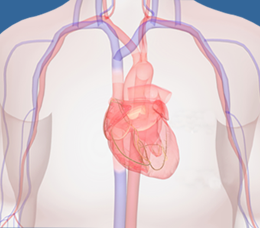
Med-IQ CME: oHCM: Changing the Paradigm for Clinicians and Keeping Patients Informed
In this #CME #MedX, get the latest guidance on managing hypertrophic cardiomyopathy (HCM), including confirming an obstructive HCM (oHCM) diagnosis, integrating recent clinical information on cardiac myosin inhibitor treatments, and addressing patients’ concerns and questions about living with HCM.
See full details chevron_right- Cost: Free
- Credit hours: 0.5 AMA PRA Category 1 Credit™
- CME credits awarded by: Med-IQ
- Format: On-Demand Online
- Material last updated: 11/6/2025
- Expiration of CME credit: 11/5/2026
-
FREE
Med-IQ CME: The Future Potential of Factor XI/XIa Inhibitors to Address Stroke Risk in AF
In this CME activity, discover the latest information on investigational factor XI/XIa inhibitors, including results from completed clinical trials and news about ongoing clinical trials, to explore their potential role in managing stroke risk in patients with atrial fibrillation (AF).
See full details chevron_right- Cost: Free
- Credit hours: 0.5 AMA PRA Category 1 Credit™
- CME credits awarded by: Med-IQ
- Format: On-Demand Online
- Material last updated: 1/14/2026
- Expiration of CME credit: 1/13/2027
-
FREE
Boston University & Med-IQ: BCMA-Directed Bispecific Antibodies in Multiple Myeloma: Mechanisms of Action, Clinical Efficacy, and Emerging Therapeutics
Expert faculty dive into the rapidly evolving world of BCMA-directed bispecific antibodies for multiple myeloma, exploring practical strategies to bring these cutting-edge therapies into everyday clinical care.
This series was developed by Boston University Chobanian & Avedisian School of Medicine in collaboration with the American Academy of Physician Associates, the Association of PAs in Oncology, HealthTree Foundation, and Med-IQ.
See full details chevron_right
- Cost: Free
- Credit hours: 0.25 AMA PRA Category 1 Credits™
- CME credits awarded by: Boston University Chobanian & Avedisian School of Medicine
- Format: On-Demand Online
- Material last updated: 10/20/2025
- Expiration of CME credit: 10/19/2026
-
FREE
Boston University & Med-IQ: The Prevention, Monitoring, and Management of Adverse Events Associated With BCMA-Directed Bispecific Antibodies in Multiple Myeloma
Faculty discusses the prevention and management of cytokine release syndrome (CRS), immune effector cell–associated neurotoxicity syndrome (ICANS), and infections in patients with relapsed/refractory multiple myeloma treated with BCMA-directed bispecific antibodies.
This series was developed by Boston University Chobanian & Avedisian School of Medicine in collaboration with the American Academy of Physician Associates, the Association of PAs in Oncology, HealthTree Foundation, and Med-IQ.
See full details chevron_right- Cost: Free
- Credit hours: 0.25 AMA PRA Category 1 Credits™
- CME credits awarded by: Boston University Chobanian & Avedisian School of Medicine
- Format: On-Demand Online
- Material last updated: 11/3/2025
- Expiration of CME credit: 11/2/2026
-
FREE
Boston University & Med-IQ: BCMA-Directed Bispecific Antibodies in Multiple Myeloma: Bridging Academic and Community Practice
Discover how communities of practice are expanding access to bispecific antibodies, as faculty share practical guidance on starting these therapies in community settings and smoothly transitioning patients from academic centers to local care.
This series was developed by Boston University Chobanian & Avedisian School of Medicine in collaboration with the American Academy of Physician Associates, the Association of PAs in Oncology, HealthTree Foundation, and Med-IQ.
See full details chevron_right- Cost: Free
- Credit hours: 0.25 AMA PRA Category 1 Credits™
- CME credits awarded by: Boston University Chobanian & Avedisian School of Medicine
- Format: On-Demand Online
- Material last updated: 12/9/2025
- Expiration of CME credit: 12/8/2026
-
FREE
Boston University & Med-IQ: Quality of Life and Patient Experience With BCMA-Directed Therapies in Multiple Myeloma
Patient advocate and HealthTree Foundation CEO Jenny Ahlstrom shares fresh survey insights into the physical, emotional, and social quality-of-life experiences of patients treated with bispecific antibodies, while spotlighting key educational, financial, and community resources designed to support them.
This series was developed by Boston University Chobanian & Avedisian School of Medicine in collaboration with the American Academy of Physician Associates, the Association of PAs in Oncology, HealthTree Foundation, and Med-IQ.
See full details chevron_right- Cost: Free
- Credit hours: 0.25 AMA PRA Category 1 Credits™
- CME credits awarded by: Boston University Chobanian & Avedisian School of Medicine
- Format: On-Demand Online
- Material last updated: 3-9-2026
- Expiration of CME credit: 3-8-2027
-
FREE
Boston University & Med-IQ: Live ECHO® Program
Empowering the Care Team: Practical Strategies for Implementing BCMA Therapies in Relapsed Refractory Multiple Myeloma
Through interactive cases and expert-led discussions, our ECHO® sessions and Community of Practice calls help community oncology teams:
- Characterize the safety and efficacy of BCMA-directed bsAbs for the treatment of MM
- Appropriately incorporate BCMA-directed bsAbs into cases of patients with MM that are representative of clinical practice
- Establish and follow workflows and lines of communication for monitoring and managing BCMA bsAb treatment-related adverse events
- Summarize the importance and benefits of CoPs to providing coordinated, multidisciplinary, and interprofessional care for patients with MM receiving BCMA-directed bsAbs
- Cost: Free
- Credit hours: 6.0 AMA PRA Category 1 Credits™
- CME credits awarded by: Boston University Chobanian & Avedisian School of Medicine
- Format: Conference
-
FREE
ScientiaCME Revenge of the nRDS: taking the fight to neonatal respiratory distress syndrome with optimized CPAP, lung ultrasound, and less invasive surfactant care
In this online, self-learning activity:
Neonatal respiratory distress syndrome (nRDS) remains a leading cause of respiratory failure and morbidity among preterm infants worldwide, despite major advances in antenatal steroids, continuous positive airway pressure (CPAP), and surfactant therapy. Contemporary guidelines emphasize early noninvasive respiratory support from birth, selective surfactant rescue once CPAP begins to fail, and structured, protocolized care across gestational age strata. Yet practice-pattern studies across high- and middle-income settings show wide variation in initial respiratory support, surfactant thresholds, and use of minimally invasive techniques, with extremely preterm and late preterm infants often receiving care that diverges from guideline-concordant pathways. These inconsistencies increase cumulative ventilator exposure and risk of bronchopulmonary dysplasia (BPD) and other complications, underscoring a persistent implementation gap between best evidence and routine NICU care.
See full details chevron_right- Cost: Free
- Credit hours: 1.0 AMA PRA Category 1 Credit(s)™
- CME credits awarded by: ScientiaCM
- Format: On-Demand Online
- Material last updated: 5/27/2026
- Expiration of CME credit: 5/27/2028
-
FREE
ScientiaCME Technique, tests, and timely step-up: making inhaler use, biomarkers, and escalation routine in asthma
In this online, self-learning activity:
Asthma remains a highly prevalent chronic respiratory disease, affecting more than 26 million people in the United States, including over 4.5 million children, with several thousand deaths and substantial emergency department and inpatient utilization each year despite effective preventives. Persistent symptoms, recurrent exacerbations, and preventable hospitalizations indicate gaps in risk stratification and in the consistent application of guideline-based care, even with comprehensive frameworks such as the Global Initiative for Asthma (GINA) strategy. Many severe attacks still occur, requiring parenteral bronchodilators, systemic corticosteroids, magnesium sulfate, oxygen, and respiratory-support devices, underscoring missed opportunities to optimize maintenance regimens and device use upstream.
See full details chevron_right- Cost: Free
- Credit hours: 1.0 AMA PRA Category 1 Credit(s)™
- CME credits awarded by: ScientiaCME
- Format: On Demand Online
- Material last updated: 6/6/2026
- Expiration of CME credit: 6/6/2028