Oncology CME
1 - 20 of 27 results
-
SAVE 20%. USE CODE CME20
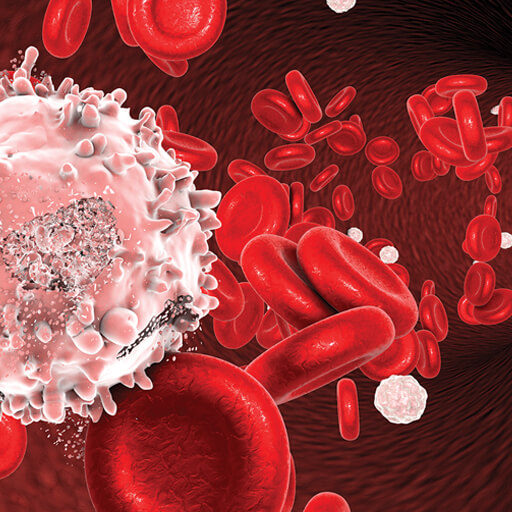
Oakstone CME The Brigham and Dana-Farber Board Review and Comprehensive Update in Hematology and Oncology
Essential Hematology and Oncology CMEThe Brigham and Dana-Farber Board Review and Comprehensive Update in Hematology and Oncology is a case-based online video CME program focused on improving overall knowledge and clinical competency with comprehensive updates on basic principles, changing guidelines, and therapeutic strategies. Continuing medical education areas for practice improvement include:
- Hematopoiesis and Cytokines
- Platelet Disorders
- Molecular Basis of Cancer
- New Therapies (Pharmacology)
- Palliative Care (Management of Symptoms/End of Life)
- Gastrointestinal Cancers (Neuroendocrine/Esophageal/Pancreas/Colorectal)
- Thoracic Oncology (Head/Neck/Lung/Thyroid)
- and many more…
- Cost: $1895
- Credit hours: 39
- CME credits awarded by: Oakstone Publishing
- Format: Online, On Demand, USB
- Material last updated: March 15, 2025
- Expiration of CME credit: March 14, 2028
-
WashU Medicine – Pulmonary Nodules and Early Stage Lung Cancer 2026 – November 6, 2026
Revolutionize your pulmonary diagnostic and thoracic care capabilities! Dive into a high-yield, 7-hour immersive symposium featuring hands-on procedural labs in liquid biomarkers, ultrathin bronchoscopy, cryobiopsy, robotic navigation, and bronchoscopic ablation. Empower your interprofessional team to streamline early detection, optimize non-surgical and surgical treatment plans, and claim up to 7 AMA PRA Category 1 Credits™!
Held at The Ritz-Carlton, St. Louis 100 Carondelet Plaza, St. Louis, Missouri, USA, 63105
See full details chevron_right- Cost: $125-$250
- Credit hours: 7 AMA PRA Category 1 Credits™
- CME credits awarded by: Washington University School of Medicine in St. Louis
- Format: Live Conference
- Expiration of CME credit: 11/6/2026
-
Osler Radiation Oncology Virtual Mock Oral Course October 16-19
Hone your critical reasoning and evaluation skills in a case review course designed to help you zero in on what is most clinically relevant for diagnosis, developing a management plan, and treatment approach in all essential Areas of Radiation Oncology. Emphasis is placed on the clinical management of malignant and benign diseases by requiring knowledge of anatomy, epidemiology, pathology, patterns of local, regional, and distal involvement, treatment modalities, radiation treatment planning, and treatment results, including prognosis and complications.
The course opens with a lecture presentation on the critical reasoning and communication skills essential to passing the Oral Certification exam, which will be emphasized in the recorded mock orals available for viewing. The recorded mock orals cover relevant standards-of-care cases, using a half-hour mock oral exam with feedback. In addition, participant volunteers and some of our best faculty were recorded in 25-minute virtual simulations of the Oral Board process, followed by faculty critique.
Course fees include participation in 2 private virtual mock oral sessions scheduled during the course. Participants may purchase additional mock orals if desired; however, topic availability may be limited near the start of the course. Participants are matched with faculty based on their topic selections.
See full details chevron_right- Cost: $1375
- Credit hours: 30 AMA PRA Category 1 Credit(s)™<.i>
- CME credits awarded by: The Osler Institute is accredited by the Accreditation Council for Continuing Medical Education (ACCME) to provide continuing medical education for physicians.
- Format: Virtual Zoom
-
AudioDigest CME Oncology Platinum Membership
The AudioDigest CME/CE/MOC Oncology Platinum Membership is our most comprehensive plan available. Get unlimited access to every lecture in our library across all specialties, including over 2,500 evidence-based audio lessons and written summaries with suggested readings and test questions certified for CME, CE, and MOC credits across 14 specialties.
See full details chevron_right- Cost: $999
- Credit hours: 2000+
- CME credits awarded by: Accreditation Council for Continuing Medical Education
- Format: Audio
-
Penn Radiology Breast Imaging Immersion, vol. 1: Foundations and Practical Challenges
This first volume of the Penn Radiology Breast Imaging Immersion series reinforces bedrock mammography principles and explores the issues breast radiologists encounter in everyday practice. Entitled Foundations and Practical Challenges, this edition showcases multimodality didactic and case-based sessions that analyze both imaging and interventions. Penn’s internationally acclaimed faculty presents techniques to improve accuracy and overall breast imaging outcomes in screening and diagnostic settings. Worth 16 AMA PRA Category I Credits™, this comprehensive activity allows breast imagers to meet their MSQA CME requirements with just one course.
See full details chevron_right- Cost: $725
- Credit hours: 16 AMA PRA Category 1 Credits™
- CME credits awarded by: Global Education Group
- Format: On-Demand Online
- Material last updated: 4/15/2026
- Expiration of CME credit: 4/14/2029
-
Cleveland Clinic 2nd Annual Cancer Care Conference
The 2nd Annual Cleveland Clinic Cancer Conference features the latest advances in the diagnosis and management of the most prevalent cancers at all stages of disease and treatment. A world-renowned faculty provide disease specific, evidence-based, practical presentations representing a variety of medical disciplines. This includes current and future strategies for cancer care, while detailing the role of emerging technologies, support and non-pharmacologic therapeutics for the cancer patient.
See full details chevron_right- Cost: $495
- Credit hours: 14 AMA PRA Category 1 Credits™
- CME credits awarded by: Cleveland Clinic Foundation Center for Continuing Education
- Format: On-Demand Online
- Material last updated: 3/2/2026
- Expiration of CME credit: 3/1/2028
-
FEATUREDRECOMMENDED
Oakstone ACP MKSAP Audio Companion
On-the-go Audio CME: Learn from the Experts
With its comprehensive coverage of all 16 ACP MKSAP topic areas, our all-new ACP MKSAPSM Audio Companion keeps you engaged with fascinating discussions led by renowned contributors and section editors, breaking down the latest advances in a format designed for active listening.
See full details chevron_right- Cost: Starting at $529
- Credit hours: 115+ Annually
- CME credits awarded by: Oakstone Publishing, LLC
- Format: On-Demand Online, Online Audio, Audio CD
- Material last updated: July 1, 2024
-
GIFT CARD AVAILABLE
Brilliant Board Review – Internal Medicine Elite All Access Pass
Brilliant Courses’ Internal Medicine Board Review is a high-yield, evidence-based program crafted for busy clinicians aiming to refresh their knowledge, deepen their clinical reasoning, and stay current with evolving medical standards.
Whether you’re preparing for board certification or seeking real-world clinical insights, this all-in-one bundle delivers a comprehensive learning experience across the full spectrum of adult medicine.
Now Includes: On-Demand Internal Medicine Updates and Refresher Course
20.25 AMA PRA Category 1 Credit(s)™ and up to 20.25 ABIM MOC Points
Available: October 1, 2025 – October 1, 2027
High-yield updates in internal medicine and key specialties, with practical, evidence-based learning designed for internists, hospitalists, primary care specialists, PAs, NPs, nurses, residents, and subspecialists.
See full details chevron_right- Cost: $999
- Credit hours: 20 AMA PRA Category 1 Credit(s)™ and 20 MOC points
- CME credits awarded by: CME credits awarded by: In support of improving patient care, this activity has been planned and implemented by Partners for Advancing Clinical Education (Partners) and Brilliant Board Prep LLC. Partners is jointly accredited by the Accreditation Council for Continuing Medical Education (ACCME), the Accreditation Council for Pharmacy Education (ACPE), and the American Nurses Credentialing Center (ANCC), to provide continuing education for the healthcare team.
- Format: On Demand Online
-
SAVE $50 - 3 COURSES IN 1
Physician’s Healthcare Communication CME Course Bundle from Ripple Health AI
Improve all aspects of your clinical communication with this three-course bundle designed for physicians from Ripple Health AI. These courses help build practical skills for physicians navigating patient conflict, fostering relational care, and leading high‑performing teams, providing clinicians with tools to improve patient trust, clarity, and collaboration in every clinical setting.
See full details chevron_right- Cost: $250
- Credit hours: 3.00 AMA PRA Category 1 Credit™ Hours
- CME credits awarded by: Joint Providership by WSMA and Ripple Health AI
- Format: On Demand Online
- Expiration of CME credit: 03/30/2029
-
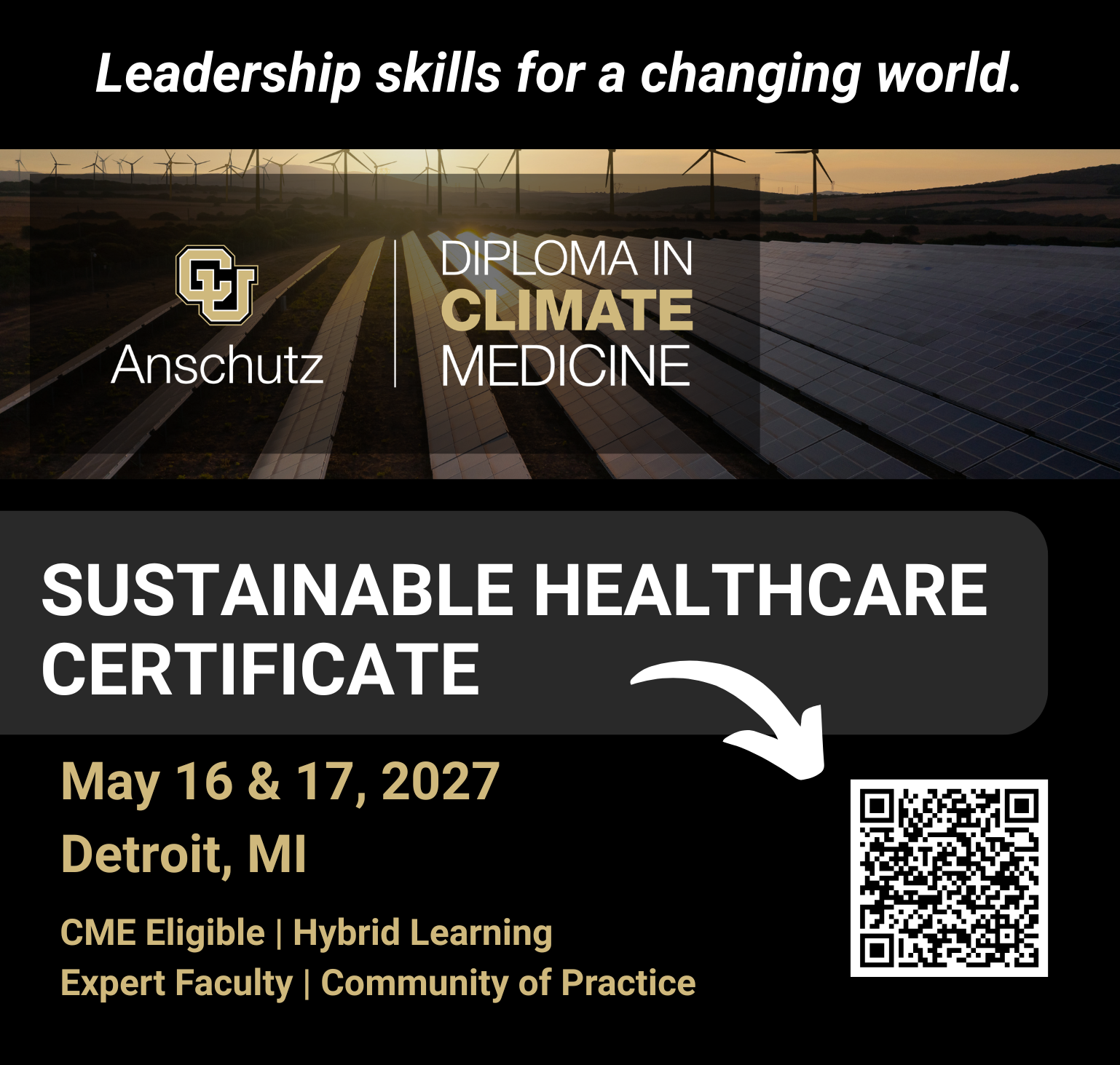
University of Colorado Anschutz – Diploma in Climate Medicine – Sustainable Healthcare Certificate
Hybrid Learning including asynchronous online content (35 hours), virtual sessions (9 hours), and in person education (2 days).The U.S. healthcare sector accounts for approximately 8.5% of national carbon emissions, making sustainability a critical responsibility and opportunity for today’s healthcare leaders. This course empowers clinicians to understand healthcare’s environmental footprint and apply practical, cost-effective strategies that improve both operational performance and patient health. Participants will explore actionable approaches including energy efficiency, waste reduction, sustainable clinical practices, environmentally responsible purchasing, and healthier food systems. Emphasis is placed on solutions that align environmental stewardship with financial savings and quality improvement. By positioning clinicians as leaders in sustainability, this course equips healthcare professionals to drive institutional change, reduce emissions, and strengthen their organization’s commitment to community health, resilience, and long-term well-being.
Course Dates: 2:00–5:00 p.m. Mountain Time, May 5, 7 & 10, 2027 (Virtual portion), all day May 16–17, 2027 (In-person portion)
See full details chevron_right- Cost: $1900-$3150
- Credit hours: 43.25 AMA PRA Category 1 Credit(s)™️
- CME credits awarded by: The Wilderness Medical Society
- Format: Hybrid
-
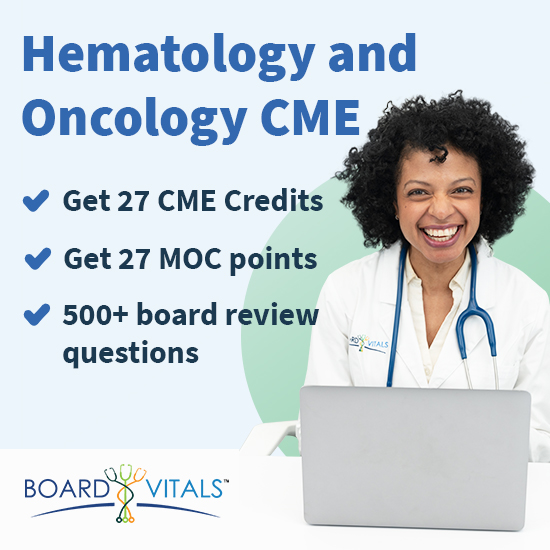
BoardVitals Hematology and Oncology CME Board Review
The BoardVitals Hematology and Oncology CME Review offers clinicians 27 AMA PRA Category 1 CreditsTM, 27 ABIM MOC points, and over 500 Hematology and Oncology board review questions. The questions cover key topics including Breast Cancer, Gynecologic Cancer, and Transfusion Medicine. This question bank will assist clinicians with Hematology and Oncology certification and recertification.
The BoardVitals Hematology and Oncology CME Review also features:
- Quick and Convenient CME
- Computer, phone, and tablet access
- Constantly updated up-to-date questions
- Questions that are targeted specifically to the exam
- Online CME tracker
- 100% Pass Guarantee
- Statistical comparison to other Hematology and Oncology test-takers (Nationally)
After completing this activity, you should be able to:
- Make a diagnosis
- Order and interpret results
- Assess risk, determine prognosis, and apply principles from epidemiologic studies
- Describe the underlying pathophysiology of disease and basic science knowledge
Target Audience: Hematologists and Oncologists
See full details chevron_right- Cost: $889
- Credit hours: 27
- CME credits awarded by: BoardVitals
- Format: On-Demand Online
- Material last updated: Continuously Updated
-
AudioDigest CME Addiction Medicine Topical Collection
Get up-to-date, evidence-based guidance on substance use and addictive disorders, including prevention, treatment, and harm reduction strategies. Primarily intended for Medical Doctors and Registered Nurses in Family Practice, Pediatrics, Internal Medicine, Anesthesiology, Psychiatry, and Obstetrics & Gynecology, this collection fulfills up to 8 hours of DEA registration requirements for physicians across all medical specialties.
See full details chevron_right- Cost: $399
- Credit hours: 21+
- CME credits awarded by: Accreditation Council for Continuing Medical Education
-
StatPearls Unlimited Physician MD/DO/PA CME
Stay on top of your game with the StatPearls Physician Unlimited CME programs. With 6,046 activities, StatPearls is the largest CME provider in the world. These Pub-Med Indexed articles are categorized into 162 specialty areas which lets you better access activities that will make the biggest impact on your practice. One subscription allows access to all the activities, including all state-requirements.
Pricing Options
- 6 Month subscription: All 6,339 CME Activities – $249 per 6 months
- Annual subscription: All 6,339 CME Activities – $349 per 1 year
- Lifetime: All 6,339 CME Activities + Access to Board Reviews Forever – $1999
- Cost: Varies
- CME credits awarded by: ETSU
- Format: On Demand Online & Board Reviews
-
SAVE 20%. USE CODE CME20
Oakstone CME The Brigham and Dana-Farber Board Review and Comprehensive Update in Oncology
Can’t Miss Topics in Oncology CME
Gain essential knowledge with The Brigham and Dana-Farber Board Review and Comprehensive Update in Oncology. This dynamic online CME course delivers the latest insights in oncology management through expert-led, case-based presentations designed to strengthen clinical decision-making and board exam readiness. Take advantage of continuing medical education focused on:- Infections in Cancer Patients
- Multiple Myeloma
- Waldenstrom Macroglobulemia and Amyloidosis
- Head and Neck Cancers
- Management of Non Small Cell Lung Cancer
- Carcinoid and Neuroendocrine Tumors
- Novel Approaches to Esophageal and Gastric Cancer Management
- and many more…
- Cost: $1395
- Credit hours: 28.25
- CME credits awarded by: Oakstone Publishing
- Format: On-Demand Online, Online Video, Online Audio, Audio CD
- Material last updated: March 15, 2025
- Expiration of CME credit: March 14, 2028
-
AudioDigest CME Medical Ethics
Navigate ethical challenges in patient care, clinical decision-making, and professional accountability. Topics include end-of-life care, healthcare disparities, confidentiality, and disclosure of medical errors. Relevant for providers in all specialties, this collection was curated to ensure fair, just, and patient-centered practices while reinforcing the principles of dignity and respect in the healthcare community.
See full details chevron_right- Cost: $99
- Credit hours: 12
- CME credits awarded by: Accreditation Council for Continuing Medical Education
- Format: On-Demand Online
-
Penn Radiology Comprehensive Neuroradiology: Advances in Practice
Comprehensive Neuroradiology: Advances in Practice provides a thoughtful discussion of a wide spectrum of brain, head, neck and spine imaging topics. Penn Radiology’s globally acclaimed faculty focuses on pattern recognition and interpretation of neuroimaging findings, which will result in more succinct differential diagnoses. A host of didactic and case based presentations will detail the impact of modality advances, with additional emphasis placed on neurovascular and degenerative disease. Worth 17.5 AMA PRA Category I Credits™, applicable towards Maintenance of Certification requirements.
See full details chevron_right- Cost: $695
- Credit hours: 17.5
- Format: On Demand Online
- Material last updated: December 15, 2024
- Expiration of CME credit: December 14, 2027
-
SAVE $50
Advances in Nuclear Medicine and Molecular Imaging
Advances in Nuclear Medicine and Molecular Imaging features fourteen internationally renowned faculty experts discussing nuclear medicine’s latest trends and emerging procedures. Created from the Mid-Eastern Chapter of the Society of Nuclear Medicine and Molecular Imaging’s 52nd Annual Conference, this activity presents the impact of radiopharmaceuticals on imaging, cardiology, oncology and much more. Robust discussions of imaging tools, administration equipment, dosimetry and future applications are included, as well. Worth 15 AMA PRA Category I Credits™, Advances in Nuclear Medicine and Molecular Imaging meets Nuclear Medicine/PET accreditation requirements and provides an essential update for all physicians and technologists involved with this area of medicine.
See full details chevron_right- Cost: $595
- Credit hours: 15
- Material last updated: October 4, 2024
- Expiration of CME credit: October 3, 2027
-
SAVE 10% WITH CODE CMELIST10
New York Medical Cannabis Program Required Course Bundle – TheAnswerPage
The New York Medical Cannabis Program Required Course Bundle has been approved by the New York State Office of Cannabis Management and satisfies the New York educational requirements to become a practitioner with the New York Medical Cannabis Program.
Subscribers can complete the curriculum and refer back to the content at any point throughout the period of accreditation.
See full details chevron_right- Cost: $165
- Credit hours: 4 CME/CE credits for doctors, nurses, NPs and pharmacists.
- CME credits awarded by: ACCME – AMA PRA Category 1 Credits™, ACPE, ANCC
- Format: On-Demand Online
- Material last updated: 4/22/2026
- Expiration of CME credit: 4/22/2028
-
SAVE 10% WITH CODE CMELIST10
Ohio Healthcare Provider Medical Marijuana Course Bundle for Certification (or maintenance of the CTR) – TheAnswerPage
The Ohio Healthcare Provider Medical Marijuana Course Bundle for Certification (or maintenance of the CTR) is certified by the Ohio State Medical Association and satisfies the CME requirements for the initial Ohio Certificate to Recommend (CTR) application or for maintenance of the CTR.
Subscribers can complete the curriculum and refer back to the content at any point throughout the period of accreditation.
See full details chevron_right- Cost: $189
- Credit hours: 4 CME/CE credits for doctors, nurses, NPs and pharmacists.
- CME credits awarded by: ACCME – AMA PRA Category 1 Credits™, ACPE, ANCC
- Format: On-Demand Online
- Material last updated: 4/22/2026
- Expiration of CME credit: 4/22/2028
-
SAVE 10% WITH CODE CMELIST10
Pennsylvania Medical Marijuana Program Required Course Bundle – TheAnswerPage
The Pennsylvania Medical Marijuana Program Required Course Bundle has been approved by the Pennsylvania Department of Health and satisfies the Pennsylvania educational requirements to become a practitioner with the Pennsylvania Medical Marijuana Program. Subscribers can complete the curriculum and refer back to the content at any point throughout the period of accreditation.
See full details chevron_right- Cost: $189
- Credit hours: 4 CME/CE credits for doctors, nurses, NPs and pharmacists.
- CME credits awarded by: ACCME – AMA PRA Category 1 Credits™, ACPE, ANCC
- Format: On-Demand Online
- Material last updated: 4/22/2026
- Expiration of CME credit: 4/22/2028