Med-IQ CME Courses
1 - 20 of 20 results
-
FREE
Duke Health & Med-IQ CME: Navigating a New Diagnosis of Benign Brain Tumor
In this brief 15-minute activity, you will:
– Follow the case of a patient who presents with foot drop and no other medical conditions
See full details chevron_right
– Choose optimal management approaches by answering nongraded questions within the activity (answers are collected for informational purposes only and used to assess the effectiveness of this educational activity)
– See how your answers compare with those of your peers
– View video clips providing expert insights- Cost: Free
- Credit hours: .25 AMA PRA Category 1 Credit™
- CME credits awarded by: Med-IQ is accredited by the Accreditation Council for Continuing Medical Education (ACCME) to provide continuing medical education for physicians.
- Format: On-Demand Online
- Material last updated: 11/20/2025
- Expiration of CME credit: 11/19/2026
-
FREE
Med-IQ CME: ATTR-CM at ACC.26: New Evidence, Evolving Strategies
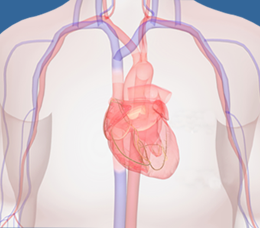
This educational activity reviews emerging clinical evidence and evolving treatment strategies for transthyretin amyloid cardiomyopathy (ATTR-CM), with a focus on recently approved disease-modifying therapies. Learners will examine key clinical trial data related to efficacy, safety, quality of life, functional outcomes, and long-term disease stabilization, as well as explore how these findings may be applied in patient scenarios representative of contemporary clinical practice.
See full details chevron_right- Cost: Free
- Credit hours: 0.5 AMA PRA Category 1 Credit™
- CME credits awarded by: Med-IQ
- Format: On-Demand Online
- Material last updated: 6/30/2026
- Expiration of CME credit: 6/29/2027
-
FREE
Duke Health & Med-IQ CME: Advanced Chronic Kidney Disease: How Do We Prolong Life and Avoid Dialysis?
Meet a 52-year-old woman with type 2 diabetes and hypertension whose recent laboratory results reveal a decline in kidney function. How would you manage this patient? In this 15-minute activity, read about next steps in the management of advanced kidney disease.
See full details chevron_right- Cost: Free
- Credit hours: 0.25 AMA PRA Category 1 Credit™
- CME credits awarded by: Med-IQ
- Format: On-Demand Online
- Material last updated: 3/18/26
- Expiration of CME credit: 3/17/27
-
FREE
Boston University & Med-IQ: BCMA-Directed Bispecific Antibodies in Multiple Myeloma: Mechanisms of Action, Clinical Efficacy, and Emerging Therapeutics
Expert faculty dive into the rapidly evolving world of BCMA-directed bispecific antibodies for multiple myeloma, exploring practical strategies to bring these cutting-edge therapies into everyday clinical care.
This series was developed by Boston University Chobanian & Avedisian School of Medicine in collaboration with the American Academy of Physician Associates, the Association of PAs in Oncology, HealthTree Foundation, and Med-IQ.
See full details chevron_right
- Cost: Free
- Credit hours: 0.25 AMA PRA Category 1 Credits™
- CME credits awarded by: Boston University Chobanian & Avedisian School of Medicine
- Format: On-Demand Online
- Material last updated: 10/20/2025
- Expiration of CME credit: 10/19/2026
-
FREE
Med-IQ CME: The Future Potential of Factor XI/XIa Inhibitors to Address Stroke Risk in AF
In this CME activity, discover the latest information on investigational factor XI/XIa inhibitors, including results from completed clinical trials and news about ongoing clinical trials, to explore their potential role in managing stroke risk in patients with atrial fibrillation (AF).
See full details chevron_right- Cost: Free
- Credit hours: 0.5 AMA PRA Category 1 Credit™
- CME credits awarded by: Med-IQ
- Format: On-Demand Online
- Material last updated: 1/14/2026
- Expiration of CME credit: 1/13/2027
-
FREE
Med-IQ CME: oHCM: Changing the Paradigm for Clinicians and Keeping Patients Informed
In this #CME #MedX, get the latest guidance on managing hypertrophic cardiomyopathy (HCM), including confirming an obstructive HCM (oHCM) diagnosis, integrating recent clinical information on cardiac myosin inhibitor treatments, and addressing patients’ concerns and questions about living with HCM.
See full details chevron_right- Cost: Free
- Credit hours: 0.5 AMA PRA Category 1 Credit™
- CME credits awarded by: Med-IQ
- Format: On-Demand Online
- Material last updated: 11/6/2025
- Expiration of CME credit: 11/5/2026
-
FREE
Boston University & Med-IQ: The Prevention, Monitoring, and Management of Adverse Events Associated With BCMA-Directed Bispecific Antibodies in Multiple Myeloma
Faculty discusses the prevention and management of cytokine release syndrome (CRS), immune effector cell–associated neurotoxicity syndrome (ICANS), and infections in patients with relapsed/refractory multiple myeloma treated with BCMA-directed bispecific antibodies.
This series was developed by Boston University Chobanian & Avedisian School of Medicine in collaboration with the American Academy of Physician Associates, the Association of PAs in Oncology, HealthTree Foundation, and Med-IQ.
See full details chevron_right- Cost: Free
- Credit hours: 0.25 AMA PRA Category 1 Credits™
- CME credits awarded by: Boston University Chobanian & Avedisian School of Medicine
- Format: On-Demand Online
- Material last updated: 11/3/2025
- Expiration of CME credit: 11/2/2026
-
FREE
Med-IQ CME: Addressing Increased Detection, Early Rhythm Control, and the Role of AADs in Contemporary AF Management
This webcast focuses on the role of wearable devices in the timely identification of atrial fibrillation (AF) and the evolving evidence around the rationale for and efficacy/safety of early rhythm control strategies, including guideline recommendations and expert insights on the use of antiarrhythmic drugs (AADs) and catheter ablation. It also incorporates an AI-powered patient simulator as a method by which participants can practice how they engage patients in shared decision-making discussions regarding rhythm control strategies
See full details chevron_right- Cost: Free
- Credit hours: 1.0 AMA PRA Category 1 Credit™
- CME credits awarded by: Med-IQ
- Format: On-Demand Online, Webinar
- Material last updated: 3/30/26
- Expiration of CME credit: 3/29/27
-
FREE
Med-IQ CME: Updates in R/M HNSCC From ESMO25: Novel Targeted Agents and Immunotherapies
In this MedX activity, Robert Haddad, MD, explores the latest clinical data for emerging novel therapies for recurrent/metastatic head and neck squamous cell carcinoma with an emphasis on results presented at ESMO 2025.
See full details chevron_right- Cost: Free
- Credit hours: 0.5 AMA PRA Category 1 Credit™
- CME credits awarded by: Med-IQ
- Format: On-Demand Online
- Material last updated: 12/17/2025
- Expiration of CME credit: 12/16/2026
-
FREE
Boston University & Med-IQ: BCMA-Directed Bispecific Antibodies in Multiple Myeloma: Bridging Academic and Community Practice
Discover how communities of practice are expanding access to bispecific antibodies, as faculty share practical guidance on starting these therapies in community settings and smoothly transitioning patients from academic centers to local care.
This series was developed by Boston University Chobanian & Avedisian School of Medicine in collaboration with the American Academy of Physician Associates, the Association of PAs in Oncology, HealthTree Foundation, and Med-IQ.
See full details chevron_right- Cost: Free
- Credit hours: 0.25 AMA PRA Category 1 Credits™
- CME credits awarded by: Boston University Chobanian & Avedisian School of Medicine
- Format: On-Demand Online
- Material last updated: 12/9/2025
- Expiration of CME credit: 12/8/2026
-
FREE
Med-IQ CME: ATTR-CM Treatment: Changing the Paradigm
This CME activity discusses the diagnosis and treatment of ATTR-CM and highlights key updates on ATTR-CM treatment presented at the HFSA Annual Scientific Meeting 2025 and AHA Scientific Sessions 2025.
See full details chevron_right- Cost: Free
- Credit hours: 0.5 AMA PRA Category 1 Credit™
- CME credits awarded by: Med-IQ
- Format: On-Demand Online
- Material last updated: 12/18/2025
- Expiration of CME credit: 12/17/2026
-
FREE
Duke Health & Med-IQ CME: Cervical Disc Arthroplasty or ACDF: Which Surgery Is Best for Your Patient?
In this 15-minute activity, meet 2 patients with arm pain, one of whom also presents with neck pain. How would you manage these patients? This accredited activity uses an interactive, quiz-driven microlearning format to explore clinical case scenarios with targeted questions, allowing clinicians to quickly assess their knowledge. Clinicians can compare their responses with those of their peers and receive expert guidance through video commentary.
See full details chevron_right- Cost: Free
- Credit hours: 0.25 AMA PRA Category 1 Credit™
- CME credits awarded by: Med-IQ is accredited by the Accreditation Council for Continuing Medical Education (ACCME) to provide continuing medical education for physicians.
- Format: On-Demand Online
- Material last updated: 12/1/2025
- Expiration of CME credit: 12/21/2026
-
FREE
Duke Health & Med-IQ CME: Surgical Advancements in Lung Transplant
This accredited activity reviews advancements in lung transplant surgery, with a focus on robotic lung transplant and ex vivo lung perfusion.
See full details chevron_right- Cost: Free
- Credit hours: 0.5 AMA PRA Category 1 Credit™
- CME credits awarded by: Med-IQ is accredited by the Accreditation Council for Continuing Medical Education (ACCME) to provide continuing medical education for physicians.
- Format: On-Demand Online
- Material last updated: 12/20/2025
- Expiration of CME credit: 12/21/2026
-
FREE
Boston University & Med-IQ: Quality of Life and Patient Experience With BCMA-Directed Therapies in Multiple Myeloma
Patient advocate and HealthTree Foundation CEO Jenny Ahlstrom shares fresh survey insights into the physical, emotional, and social quality-of-life experiences of patients treated with bispecific antibodies, while spotlighting key educational, financial, and community resources designed to support them.
This series was developed by Boston University Chobanian & Avedisian School of Medicine in collaboration with the American Academy of Physician Associates, the Association of PAs in Oncology, HealthTree Foundation, and Med-IQ.
See full details chevron_right- Cost: Free
- Credit hours: 0.25 AMA PRA Category 1 Credits™
- CME credits awarded by: Boston University Chobanian & Avedisian School of Medicine
- Format: On-Demand Online
- Material last updated: 3-9-2026
- Expiration of CME credit: 3-8-2027
-
FREE
Boston University & Med-IQ: Live ECHO® Program
Empowering the Care Team: Practical Strategies for Implementing BCMA Therapies in Relapsed Refractory Multiple Myeloma
Through interactive cases and expert-led discussions, our ECHO® sessions and Community of Practice calls help community oncology teams:
- Characterize the safety and efficacy of BCMA-directed bsAbs for the treatment of MM
- Appropriately incorporate BCMA-directed bsAbs into cases of patients with MM that are representative of clinical practice
- Establish and follow workflows and lines of communication for monitoring and managing BCMA bsAb treatment-related adverse events
- Summarize the importance and benefits of CoPs to providing coordinated, multidisciplinary, and interprofessional care for patients with MM receiving BCMA-directed bsAbs
- Cost: Free
- Credit hours: 6.0 AMA PRA Category 1 Credits™
- CME credits awarded by: Boston University Chobanian & Avedisian School of Medicine
- Format: Conference
-
FREE
Boston University & Med-IQ: Real-World Use of BCMA-Directed Bispecific Antibodies for Multiple Myeloma: A Panel Discussion on Experiences, Challenges, and Solutions in Community Settings
Hear from a panel of clinicians from community practices about their experiences, including the challenges and successes, with integrating B-cell maturation antigen (BCMA)-directed bispecific antibodies into their practices. Explore patient management strategies for bispecific antibodies, from starting treatment at a community center to providing long-term care after treatment initiation at either a community or tertiary center.
See full details chevron_right- Cost: Free
- Credit hours: 1.0 AMA PRA Category 1 Credits™
- CME credits awarded by: Boston University Chobanian & Avedisian School of Medicine
- Format: On Demand Online, webcast
- Material last updated: 4/30/2026
- Expiration of CME credit: 4/29/2027
-
FREE
Boston University & Med-IQ: Integrating BCMA-Directed Bispecific Antibodies Into the Treatment Algorithm for Multiple Myeloma
This CME activity reviews the efficacy and safety of available B-cell maturation antigen (BCMA)-directed bispecific antibodies for multiple myeloma and explores the latest clinical data on their use in earlier lines of therapy and in emerging combination regimens.
See full details chevron_right- Cost: Free
- Credit hours: 0.5 AMA PRA Category 1 Credits™
- CME credits awarded by: Boston University Chobanian & Avedisian School of Medicine
- Format: On-Demand Online, Webinar
- Material last updated: 5/20/2026
- Expiration of CME credit: 5/19/2027
-
FREE
Boston University & Med-IQ: Barriers to Accessing BCMA-Directed Therapies in Multiple Myeloma
This CME activity reviews various barriers to accessing B-cell maturation antigen (BCMA)-directed therapies that patients with multiple myeloma may experience. The impact of these barriers on health outcomes is discussed, along with strategies and policy solutions to help overcome them.
See full details chevron_right- Cost: Free
- Credit hours: 0.5 AMA PRA Category 1 Credits™
- CME credits awarded by: Boston University Chobanian & Avedisian School of Medicine
- Format: On-Demand Online, Webinar
- Material last updated: 6/18/2026
- Expiration of CME credit: 6/17/2027
-
FREE
Boston University & Med-IQ: The Treatment Decision-Making Process: When to Consider or Defer BCMA-Directed BsAbs in a Patient’s MM Treatment Journey
This CME activity explores the latest clinical data and provides guidance on when to consider treatment with available B-cell maturation antigen (BCMA)-directed bispecific antibodies (BsAbs), chimeric antigen receptor (CAR) T-cell therapy, or antibody-drug conjugate (ADC) therapy for patients with relapsed/refractory multiple myeloma (RRMM) based on patient-, disease-, and treatment-related factors.
See full details chevron_right- Cost: Free
- Credit hours: 0.5 AMA PRA Category 1 Credits™
- CME credits awarded by: Boston University Chobanian & Avedisian School of Medicine
- Format: On-Demand Online, Webinar
- Material last updated: 7/16/2026
- Expiration of CME credit: 7/15/2027
-
FREE
Med-IQ CME: LDL-C Management in High-Risk ASCVD: Current Treatment Options and the Evolving Role of PCSK9 Inhibitors
In this MedX activity, Michael Blaha, MD, explores the evolving landscape of low-density lipoprotein cholesterol (LDL-C) management in patients with atherosclerotic cardiovascular disease (ASCVD), with a focus on the current role of proprotein convertase subtilisin/kexin type 9 (PCSK9) inhibitors and how emerging novel PCSK9 inhibitor formulations may be integrated into clinical practice as they become available.
See full details chevron_right- Cost: Free
- Credit hours: 0.5 AMA PRA Category 1 Credit™
- CME credits awarded by: Med-IQ
- Format: On-Demand Online
- Material last updated: 2/26/2026
- Expiration of CME credit: 2/25/2027