Physician CME
106 - 125 of 216 results
-
FREE
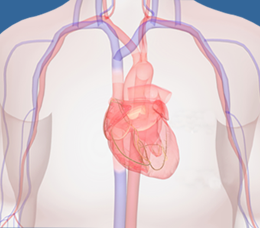
Med-IQ CME: oHCM: Changing the Paradigm for Clinicians and Keeping Patients Informed
In this #CME #MedX, get the latest guidance on managing hypertrophic cardiomyopathy (HCM), including confirming an obstructive HCM (oHCM) diagnosis, integrating recent clinical information on cardiac myosin inhibitor treatments, and addressing patients’ concerns and questions about living with HCM.
See full details chevron_right- Cost: Free
- Credit hours: 0.5 AMA PRA Category 1 Credit™
- CME credits awarded by: Med-IQ
- Format: On-Demand Online
- Material last updated: 11/6/2025
- Expiration of CME credit: 11/5/2026
-
FREE
Med-IQ CME: Updates in R/M HNSCC From ESMO25: Novel Targeted Agents and Immunotherapies
In this MedX activity, Robert Haddad, MD, explores the latest clinical data for emerging novel therapies for recurrent/metastatic head and neck squamous cell carcinoma with an emphasis on results presented at ESMO 2025.
See full details chevron_right- Cost: Free
- Credit hours: 0.5 AMA PRA Category 1 Credit™
- CME credits awarded by: Med-IQ
- Format: On-Demand Online
- Material last updated: 12/17/2025
- Expiration of CME credit: 12/16/2026
-
FREE
Med-IQ CME: The Future Potential of Factor XI/XIa Inhibitors to Address Stroke Risk in AF
In this CME activity, discover the latest information on investigational factor XI/XIa inhibitors, including results from completed clinical trials and news about ongoing clinical trials, to explore their potential role in managing stroke risk in patients with atrial fibrillation (AF).
See full details chevron_right- Cost: Free
- Credit hours: 0.5 AMA PRA Category 1 Credit™
- CME credits awarded by: Med-IQ
- Format: On-Demand Online
- Material last updated: 1/14/2026
- Expiration of CME credit: 1/13/2027
-
SkinBonesCME – Pain Management, Pharmacology & Prescribing
Can medical cannabis and opioids complement or challenge each other in modern pain care? How do you manage acute and chronic pain in primary care? These topics, and many others, will be explored during this Pain Management CME course.
See full details chevron_right- Cost: $147
- Credit hours: Up to 6.75 CME & 3.50 APRN Pharmacology Credits
- CME credits awarded by: Jointly Provided by the Postgraduate Institute for Medicine & Skin, Bones, Hearts & Private Parts (a subsidiary of Dillehay Management Group)
- Format: On-Demand Online
- Expiration of CME credit: 2 years after product release
-
$50 OFF
Cleveland Clinic 2nd Annual Cancer Care Conference
The 2nd Annual Cleveland Clinic Cancer Conference features the latest advances in the diagnosis and management of the most prevalent cancers at all stages of disease and treatment. A world-renowned faculty provide disease specific, evidence-based, practical presentations representing a variety of medical disciplines. This includes current and future strategies for cancer care, while detailing the role of emerging technologies, support and non-pharmacologic therapeutics for the cancer patient.
See full details chevron_right- Cost: $495$445
- Credit hours: 14 AMA PRA Category 1 Credits™
- CME credits awarded by: Cleveland Clinic Foundation Center for Continuing Education
- Format: On-Demand Online
- Material last updated: 3/2/2026
- Expiration of CME credit: 3/1/2028
-
SAVE 15% - USE CODE CME15
Oakstone CME The Brigham Board Review and Comprehensive Update in Gastroenterology and Hepatology
ABIM-Focused GI & Liver CME
Exam prep with confidence while strengthening your day-to-day clinical practice. This online video CME program provides high-yield, case-based learning aligned with the ABIM Gastroenterology certification and recertification exams.
Along with test-taking skills and board-style practice sessions, dynamic continuing medical education lectures in the Mass General Brigham Board Review and Comprehensive Update in Gastroenterology and Hepatology will help you sharpen differential diagnostic skills, apply current guidelines and therapeutic options, and integrate pathophysiology into patient management.
See full details chevron_right
- Cost: $1095
- CME credits awarded by: Oakstone Publishing
- Format: On-Demand Online
-
SAVE 15% - USE CODE CME15
Oakstone CME NYU Langone’s Head to Toe Imaging
Explore the Latest in Radiology Imaging CME
Stay at the forefront of radiology with NYU Langone’s Head to Toe Imaging, a comprehensive continuing medical education program built for today’s evolving imaging landscape. This case-based online video CME program delivers state-of-the-art learning that translates directly to clinical practice. You’ll gain:
• The latest updates in neurologic, musculoskeletal, abdominal, thoracic, cardiac, and breast imaging
• Integrated coverage of pediatric, emergency, PET/CT, oncologic imaging, and interventional radiology
• Guidance on safety, quality, radiation exposure, and contrast reaction management
• Insight into emerging AI applications and standardized imaging strategiesMeet your maintenance of certification requirements while strengthening diagnostic confidence and delivering high-quality, evidence-based patient care.
See full details chevron_right- Cost: $1195
- Credit hours: 31.25 AMA PRA Category 1 Credits™
- CME credits awarded by: The NYU Grossman School of Medicine
- Format: On-Demand Online
- Material last updated: February 28, 2026
- Expiration of CME credit: February 27, 2029
-
Ripple Health AI – Building and Supporting High-Performing Clinical Teams for Physicians
Build psychological safety and trust within the interprofessional team to mitigate clinical risk and drive high-reliability performance.
See full details chevron_right- Cost: $100
- Credit hours: 1.00 AMA PRA Category 1 Credits™
- CME credits awarded by: Joint Providership by WSMA and Ripple Health AI
- Format: On-Demand Online
- Material last updated: 3/31/2026
- Expiration of CME credit: 3/30/2029
-
Ripple Health AI – Physician Professionalism: Better, Safer Care
Cultivate the core behaviors required to anchor high-reliability care.
See full details chevron_right- Cost: $100
- Credit hours: 1.00 AMA PRA Category 1 Credits™
- CME credits awarded by: Joint Providership by WSMA and Ripple Health AI
- Format: On-Demand Online
- Material last updated: 4/08/2026
- Expiration of CME credit: 4/07/2029
-
Ripple Health AI – Communicating with Patients: The 4 C’s of Relational Care for Physicians
Utilize a structured approach for every patient interaction to systematically improve adherence, efficiency, and patient outcomes.
See full details chevron_right- Cost: $100
- Credit hours: 1.00 AMA PRA Category 1 Credits™
- CME credits awarded by: Joint Providership by WSMA and Ripple Health AI
- Format: On-Demand Online
- Material last updated: 4/27/2026
- Expiration of CME credit: 4/26/2029
-
FREE
Duke Health & Med-IQ: Epilepsy: Optimizing Treatment for Patients
This accredited activity for primary care providers discusses optimal therapy for patients with epilepsy. Specifically, it focuses on the importance of considering referral to epilepsy centers, especially when seizures are not well controlled. This activity also aims to educate primary care providers on how surgical evaluation and treatment may help patients achieve optimal outcomes.
See full details chevron_right- Cost: Free
- Credit hours: 0.5 AMA PRA Category 1 Credit™
- CME credits awarded by: Med-IQ
- Format: On-Demand Online
- Material last updated: 7/1/2025
- Expiration of CME credit: 6/30/2026
-
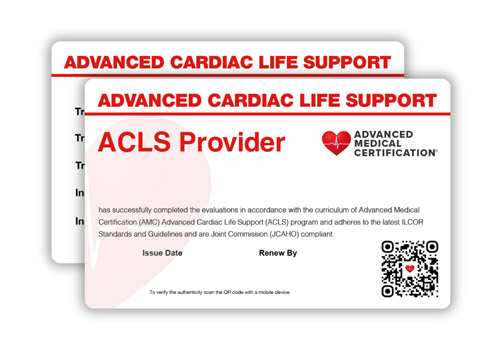
Advanced Medical Certification – ACLS Certification Online
Earn up to 8 AMA PRA Category 1 Credits™ with this 100% online, self-paced ACLS course from Advanced Medical Certification. Designed for healthcare professionals managing cardiac and other critical emergencies, the course offers a flexible way to complete certification training and receive an instant digital provider card upon completion, with certification valid for two years.
See full details chevron_right- Cost: $149
- Credit hours: 8 AMA PRA Category 1 Credits™
- CME credits awarded by: Postgraduate Institute for Medicine (PIM), jointly provided with Advanced Medical Certification
- Format: On-Demand Online
-
Advanced Medical Certification – BLS Certification Online
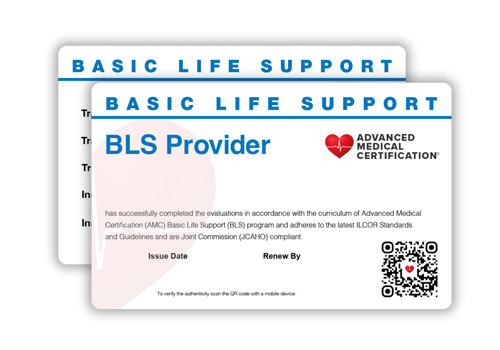
Earn up to 4 AMA PRA Category 1 Credits™ with this 100% online, self-paced BLS course from Advanced Medical Certification. Covering CPR, AED use, and essential lifesaving skills, it provides a convenient training option for healthcare providers and includes an instant digital provider card upon completion, with certification valid for two years.
See full details chevron_right- Cost: $109
- Credit hours: 4 AMA PRA Category 1 Credits™
- CME credits awarded by: Postgraduate Institute for Medicine (PIM), jointly provided with Advanced Medical Certification
- Format: On-Demand Online
-
Advanced Medical Certification – PALS Certification Online
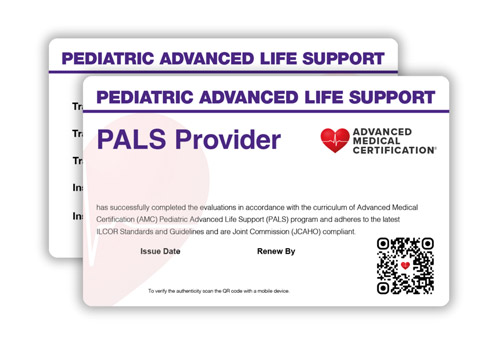
Earn up to 8 AMA PRA Category 1 Credits™ with this 100% online, self-paced PALS course from Advanced Medical Certification. Built for professionals involved in pediatric emergency care, the course offers flexible certification training and includes an instant digital provider card upon completion, with certification valid for two years.
See full details chevron_right- Cost: $149
- Credit hours: 8 AMA PRA Category 1 Credits™
- CME credits awarded by: Postgraduate Institute for Medicine (PIM), jointly provided with Advanced Medical Certification
- Format: On Demand Online
-
FREE
Boston University & Med-IQ: BCMA-Directed Bispecific Antibodies in Multiple Myeloma: Mechanisms of Action, Clinical Efficacy, and Emerging Therapeutics
Expert faculty dive into the rapidly evolving world of BCMA-directed bispecific antibodies for multiple myeloma, exploring practical strategies to bring these cutting-edge therapies into everyday clinical care.
This series was developed by Boston University Chobanian & Avedisian School of Medicine in collaboration with the American Academy of Physician Associates, the Association of PAs in Oncology, HealthTree Foundation, and Med-IQ.
See full details chevron_right
- Cost: Free
- Credit hours: 0.25 AMA PRA Category 1 Credits™
- CME credits awarded by: Boston University Chobanian & Avedisian School of Medicine
- Format: On-Demand Online
- Material last updated: 10/20/2025
- Expiration of CME credit: 10/19/2026
-
FREE
Boston University & Med-IQ: The Prevention, Monitoring, and Management of Adverse Events Associated With BCMA-Directed Bispecific Antibodies in Multiple Myeloma
Faculty discusses the prevention and management of cytokine release syndrome (CRS), immune effector cell–associated neurotoxicity syndrome (ICANS), and infections in patients with relapsed/refractory multiple myeloma treated with BCMA-directed bispecific antibodies.
This series was developed by Boston University Chobanian & Avedisian School of Medicine in collaboration with the American Academy of Physician Associates, the Association of PAs in Oncology, HealthTree Foundation, and Med-IQ.
See full details chevron_right- Cost: Free
- Credit hours: 0.25 AMA PRA Category 1 Credits™
- CME credits awarded by: Boston University Chobanian & Avedisian School of Medicine
- Format: On-Demand Online
- Material last updated: 11/3/2025
- Expiration of CME credit: 11/2/2026
-
FREE
Boston University & Med-IQ: BCMA-Directed Bispecific Antibodies in Multiple Myeloma: Bridging Academic and Community Practice
Discover how communities of practice are expanding access to bispecific antibodies, as faculty share practical guidance on starting these therapies in community settings and smoothly transitioning patients from academic centers to local care.
This series was developed by Boston University Chobanian & Avedisian School of Medicine in collaboration with the American Academy of Physician Associates, the Association of PAs in Oncology, HealthTree Foundation, and Med-IQ.
See full details chevron_right- Cost: Free
- Credit hours: 0.25 AMA PRA Category 1 Credits™
- CME credits awarded by: Boston University Chobanian & Avedisian School of Medicine
- Format: On-Demand Online
- Material last updated: 12/9/2025
- Expiration of CME credit: 12/8/2026
-
FREE
Boston University & Med-IQ: Quality of Life and Patient Experience With BCMA-Directed Therapies in Multiple Myeloma
Patient advocate and HealthTree Foundation CEO Jenny Ahlstrom shares fresh survey insights into the physical, emotional, and social quality-of-life experiences of patients treated with bispecific antibodies, while spotlighting key educational, financial, and community resources designed to support them.
This series was developed by Boston University Chobanian & Avedisian School of Medicine in collaboration with the American Academy of Physician Associates, the Association of PAs in Oncology, HealthTree Foundation, and Med-IQ.
See full details chevron_right- Cost: Free
- Credit hours: 0.25 AMA PRA Category 1 Credits™
- CME credits awarded by: Boston University Chobanian & Avedisian School of Medicine
- Format: On-Demand Online
- Material last updated: 3-9-2026
- Expiration of CME credit: 3-8-2027
-
SAVE 15% - USE CODE CME15
Oakstone CME The Brigham Board Review and Comprehensive Update in Infectious Diseases
Focused, Practical Infectious Diseases CME
Designed specifically for those who manage complex infectious diseases, the Mass General Brigham Board Review and Comprehensive Update in Infectious Diseases course will help you to integrate relevant principles, correlate pathophysiology with clinical presentations, and employ optimal treatment approaches with a clear understanding of associated risks and benefits.
This online video CME program is ideal for those in search of focused, expert-led updates and practical strategies that will enhance diagnostic and therapeutic decision-making. You’ll strengthen knowledge in preparation for ABIM board exams as you review key continuing medical education topics, including:
• Acute HIV infection management
See full details chevron_right
• Immunization indications and updates
• Travel medicine essentials
• Infection control and antibiotic resistance
• Hepatitis C therapies and sepsis management
• UTIs and infections in pregnancy
• and more…
- Cost: $1095
- CME credits awarded by: Oakstone Publishing
- Format: On-Demand Online, USB Flash Drive
-
SAVE 15% - USE CODE CME15
Oakstone CME Cleveland Clinic Multispecialty Pathology
Expert Pathology CME for Everyday Cases
Through engaging, case-based instruction, the Cleveland Clinic Multispecialty Pathology online video CME program delivers practical solutions that will help you tackle the real-world diagnostic challenges you see every day.
This continuing medical education program features renowned subspecialists who share the tips they use at the microscope, helping you strengthen diagnostic accuracy, build confidence, and enhance patient care — without unnecessary focus on esoterica. You’ll gain immediately useful insights from high-yield topics across multiple organ systems, including:
• Prostate cancer grading and genitourinary pathology essentials
See full details chevron_right
• Thoracic pathology and high-value immunostains
• Liver, pancreas, and gastrointestinal diagnostic challenges
• Breast pathology, including lobular and triple-negative tumors
• Gynecologic pathology updates and emerging entities
- Cost: $995
- Credit hours: 14.75 AMA PRA Category 1 Credits™
- CME credits awarded by: Cleveland Clinic Center
- Format: On-Demand Online
- Material last updated: 3-31-2026
- Expiration of CME credit: 3-30-2028