Pathology CME
1 - 17 of 17 results
-
Osler Pathology Virtual Review Spring April 11-17, 2026
This comprehensive review aims to enhance your clinical knowledge and help you pass your Pathology AP and CP exams, whether for certification or continuing certification. The course emphasizes evidence-based practice and board-relevant standards of care, incorporating new concepts, testing strategies, quality control, and laboratory management skills. Many previous participants have found that the course improved their diagnostic and evaluation skills and helped them identify specific areas of weakness for further self-study.
The course includes didactic lectures with review questions at the end of each topic, an e-syllabus containing all PowerPoint presentations, and designated Q&A sessions covering Blood Bank procedures and Clinical Chemistry. Lectures on Anatomical Pathology will be held from Saturday through Tuesday, while Clinical Pathology topics will be covered from Tuesday through Friday. Tuesday is designated as an overlap day, featuring both Anatomic and Clinical Pathology topics throughout the day.
The webinar will be delivered via Zoom Cloud Meetings, facilitating interaction between participants and faculty. For the best experience, it is recommended to use a computer with a strong internet connection to join the webinar. All participants will receive complimentary streaming access to the course recording until June 7, 2026.
See full details chevron_right- Cost: $1475
- Credit hours: The Osler Institute designates this Live Activity for a maximum of 70 AMA PRA Category 1 Credit(s)™. Each physician should claim only the credit commensurate with their participation in the activity.
- CME credits awarded by: The Osler Institute is accredited by the Accreditation Council for Continuing Medical Education (ACCME) to provide continuing medical education for physicians.
- Format: Virtual Zoom
-
FEATUREDRECOMMENDED
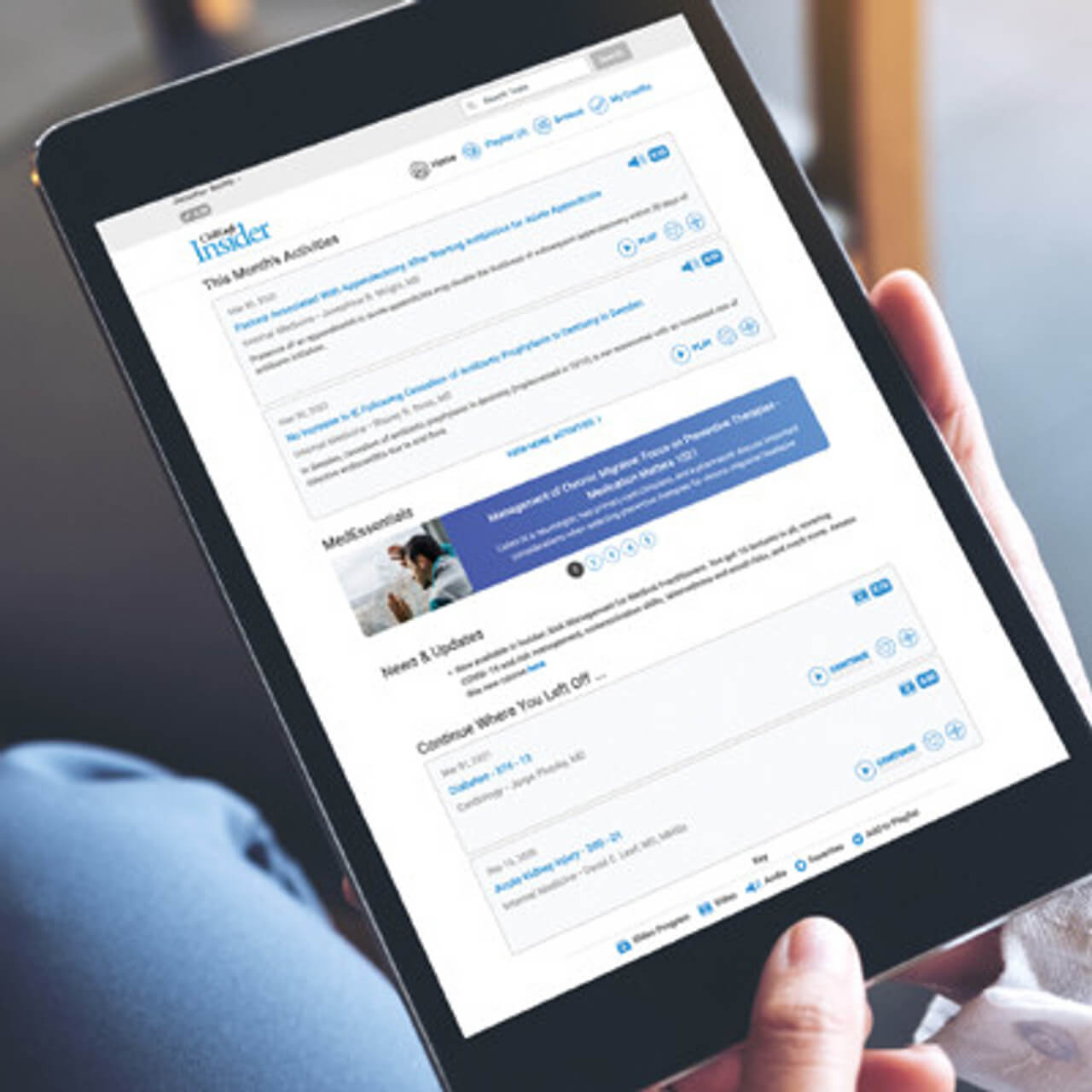
Oakstone CME CMEinfo Insider w/ up to $3,200 Gift Card
CMEinfo Insider is developed for medical professionals who want to save time & money. Get a $3,200 Amazon® gift card or save up to $3,200 when you join today!
Stay current on cutting edge content in your primary specialty, with a limitless opportunity to research topics important to you and your patients, earn unlimited AMA PRA Category 1 Credits,™ and take advantage of exceptional CME gift card opportunities.
A World of Medical Information at Your Fingertips
We partner with premier medical teaching institutions, professional associations, and highly regarded clinicians to deliver top-notch CME activities. They bring you the most relevant medical information for you to review and apply in your own practice.Connect to CMEinfo Insider and get:
- Comprehensive one-stop online resource for all stages of your medical career
- 24/7 access to the entire Insider library of board reviews, clinical updates, and journal article summaries from your computer, tablet or mobile device
- Earn all the AMA PRA Category 1 Credits™ you need
- Over 18,000 journal article summaries with audio commentary
- Over 1,230 board review and clinical update activities offered in video format
- New, cutting-edge topics added every month at no additional charge
- Online quizzes and instant pass/fail notification
- Unbiased and evidence-based content with no external advertising
- Pass board certification and maintenance of certification exams — guaranteed!
- Plus, save up to $3,200 or get up to a $3,200 Amazon® gift card when you join today! Please note that your receipt will be itemized per guidelines set forth by the ACCME for any accredited CME purchase sold in combination with a gift card. The gift card value is not a tax deductible professional expense. (See Gift Card Disclosures section below for further details.)
- Cost: Varies
- Credit hours: Unlimited
- CME credits awarded by: Oakstone Publishing
- Format: On-Demand Online, Online Video, Online Audio
- Material last updated: Continuously Updated
-
Cleveland Clinic Comprehensive and Immersive Soft Tissue Pathology
CME Focused on Soft Tissue Diagnostics
This online CME course offers an in-depth, case-based exploration of soft tissue pathology—from benign lesions and reactive mimics to high-grade sarcomas. Renowned faculty preview a wide range of real-world cases and provide practical strategies for navigating common diagnostic challenges.
Through the Cleveland Clinic Comprehensive and Immersive Soft Tissue Pathology continuing medical education course, you’ll develop skills and tools to triage and work up mesenchymal lesions while strengthening your use of immunohistochemistry, molecular tools, and radiologic studies in soft tissue tumor diagnosis. You’ll be better equipped to:
- Identify common and rare soft tissue tumors
- Recognize diagnostic pitfalls
- Develop a systematic diagnostic approach
- Integrate ancillary testing in clinical workflows
See full details chevron_right- Cost: $895
- Credit hours: 14.75
- CME credits awarded by: Oakstone Publishing
- Format: On-Demand Online, Online Video
- Material last updated: July 31, 2025
- Expiration of CME credit: July 30, 2027
-
FEATUREDRECOMMENDED
MDCalc CME Bundle w/ $3,500 Amazon or Visa Gift Card
Maximize your CME allowance with MDCalc and get up to a $3,500 bonus gift card of your choice. Earn AMA PRA Category 1 CreditsTM for clinical content on 150+ calculators across multiple medical specialties. Easily earn and redeem CME at the point-of-care, online on our website or mobile app. Over 1 million medical professionals use MDCalc’s 550+ tools daily to support clinical decision making at the bedside.
See full details chevron_right- Cost: Varies
- Credit hours: Unlimited
- CME credits awarded by: EBMedicine
- Format: On-Demand Online
- Material last updated: Continuously Updated
-
SAVE 15% USE CODE CME15
Oakstone CME Practical Reviews
Practical Reviews offers journal summaries from leading medical journals. This activity makes earning CME credits quick and easy and helps physicians stay up to date on the latest advances and news in their specialty.
Practical Reviews is offered in over 20 specialties and can be accessed via online video, online audio, audio cd, or the convenient Practical Reviews mobile app.
See full details chevron_right- Cost: Varies depending on course
- Credit hours: 56-70
- CME credits awarded by: Oakstone Publishing
- Format: On-Demand Online, Online Video, Online Audio, Audio CD, Mobile App
- Material last updated: Continuously Updated
-
FEATURED
BoardVitals Pathology CME Board Review
The BoardVitals Pathology CME Review offers clinicians 60 AMA PRA Category 1 CreditsTM, 60 SAM Credits, and over 950 Pathology board review questions. The questions cover key topics including lab management, blood banking, and molecular pathology. This question bank will assist clinicians with Pathology certification and recertification.
The BoardVitals Pathology CME Review also features:
- Quick and Convenient CME
- Computer, phone, and tablet access
- Constantly updated up-to-date questions
- Questions that are targeted specifically to the exam
- Online CME tracker
- 100% Pass Guarantee
- Statistical comparison to other Pathology test-takers (Nationally)
After completing this activity, you should be able to:
- Determine an accurate histological diagnosis
- Determine appropriate interpretation as well as limitations for a variety of laboratory tests
- Identify common pitfalls encountered while making a pathological diagnosis
Target Audience: Pathologists
See full details chevron_right- Cost: $599
- Credit hours: 60
- CME credits awarded by: BoardVitals
- Format: On-Demand Online
- Material last updated: Continuously Updated
-
SAVE 15% USE CODE CME15
Oakstone CME Gastropathology
Discover New Guidelines with Pathology CME
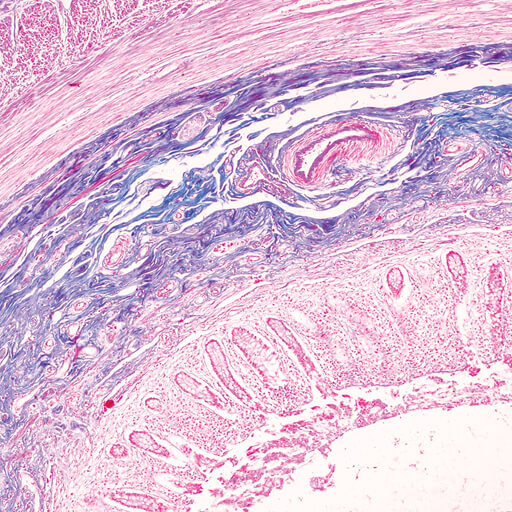
Gastropathology is an online CME course that combines traditional lectures and microscopy sessions to review recent concepts in esophagitis, gastritis, and dysplasia, as well as discussions of the small intestine, colon, and anus.
In addition to discussions on difficult and rapidly evolving areas in pathology, sessions in this continuing medical education program — part of our Masters of Pathology Series — address topics that will help you:
- Understand liver neoplasms and medical liver
- Define gastrointestinal and liver mesenchymal tumors
- Assess inflammatory esophagus biopsies, especially those with lymphocytosis
- Evaluate hepatic adenomas
- Recognize clues for separating reactive and neoplastic changes in esophageal and gastric samples
Learning Objectives
After viewing this program, the participant will be better able to:
- Discuss the significance of esophageal lymphocytosis
- Use diagnostic clues to separate reactive and dysplastic changes in columnar biopsies from the esophagus and stomach
- Describe the features of autoimmune hepatitis and its differential diagnosis
- Recognize the key types of gastritis
- Describe several types of gastric polyps
- Discuss non-neoplastic small intestinal pathology
- Define HPV-associated anal neoplasms
- Understand the classification of hepatic neoplasms
- Recognize key GI tract mesenchymal neoplasms
- Describe key features of appendiceal neoplasms
Intended Audience
This educational activity was designed for pathologists and gastroenterologists in practice, pathology residents, and gastroenterology fellows.
See full details chevron_right- Cost: $895
- Credit hours: 14.75
- CME credits awarded by: Oakstone Publishing, LLC
- Format: On-Demand Online, Online Video
- Material last updated: October 15, 2024
- Expiration of CME credit: October 14, 2027
-
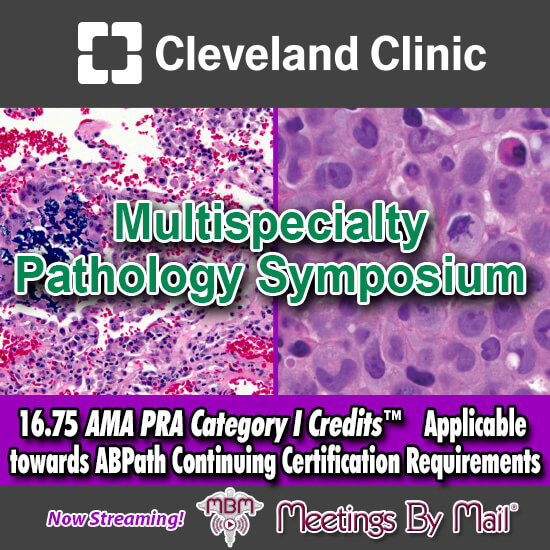
Cleveland Clinic Multispecialty Pathology Symposium
The Cleveland Clinic Multispecialty Pathology Symposium features an expert faculty addressing commonly encountered problems and providing practical tips from their own experience at the microscope. A broad spectrum of cases will be presented, reviewing genitourinary, pulmonary, gastrointestinal and soft tissue, gynecologic, and breast pathology. Participation in this activity will increase knowledge and improve performance in pathology, which will positively impact patient care.
Worth 16.75 AMA PRA Category I Credits™, all applicable towards the Lifelong Learning requirements in the American Board of Pathology (ABPath) Continuing Certification program. NO POST TEST required.
See full details chevron_right- Cost: $495
- Credit hours: 16.75
- Format: On-Demand Online
- Material last updated: 4/1/24
- Expiration of CME credit: 3/31/26
-
SAVE 15% USE CODE CME15
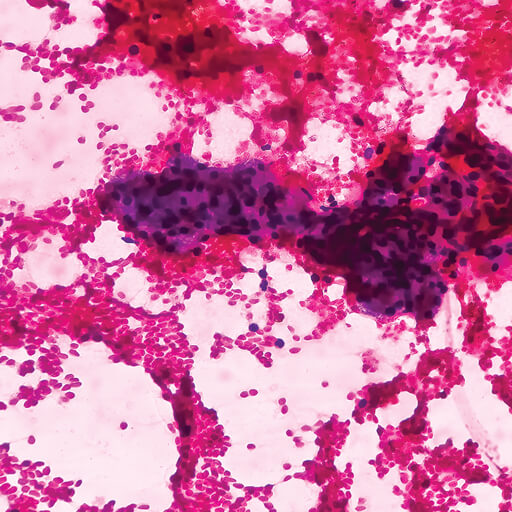
Oakstone CME Harvard Advances in Cytology and Small Biopsies
State-of-the-Art Diagnostic Pathology CME
You’ll gain knowledge, confidence, and experience through this unique series of online video CME lectures highlighting the integration of small biopsies, a common component of the typical FNAB procedure. Expert faculty from Harvard Medical School’s three academic centers — many of whom are leaders in the field — deliver a comprehensive tutorial on the current state of the art in cytology. Harvard Advances in Cytology and Small Biopsies continuing medical education topics including:
• Advances in automation and standardized terminology
See full details chevron_right
• “Challenging Cases and Lessons Learned” case-based virtual microscopy sessions
• Urinary cytopathology and changes to The Paris System 2.0 last updated in 2022
• The role of the cytopathologist in diagnosis using minimally invasive techniques
• Updates on utilizing ancillary testing for diagnosis, prognosis, and targeted therapy
• And more!- Cost: $995
- Material last updated: July 31, 2023
- Expiration of CME credit: July 30, 2026
-
StatPearls Unlimited Physician MD/DO/PA CME
Stay on top of your game with the StatPearls Physician Unlimited CME programs. With 6,046 activities, StatPearls is the largest CME provider in the world. These Pub-Med Indexed articles are categorized into 162 specialty areas which lets you better access activities that will make the biggest impact on your practice. One subscription allows access to all the activities, including all state-requirements.
Pricing Options
- 6 Month subscription: All 6,339 CME Activities – $249 per 6 months
- Annual subscription: All 6,339 CME Activities – $349 per 1 year
- Lifetime: All 6,339 CME Activities + Access to Board Reviews Forever – $1999
- Cost: Varies
- CME credits awarded by: ETSU
- Format: On Demand Online & Board Reviews
-
SAVE 15% USE CODE CME15
Oakstone CME Need-to-Know Pathology: A Review for Physicians in a Hurry
Pathology CME: Board Review and More
Expert speakers deliver a high-yield review of a comprehensive array of head-to-toe anatomic pathology topics in this continuing medical education program. They also delve into the nuts and bolts of running a multidisciplinary clinical pathology laboratory with support for highly specialized testing.
Need-to-Know Pathology: A Review for Physicians in a Hurry provides a thorough evaluation of pathologic features and in-depth work up, using a case-based format with high-quality images. It’s an online CME board review focused on important topics within each subspecialty of anatomic and clinical pathology, including:
- Dermatopathology and Breast Pathology
- Genitourinary and Gynecologic Pathology
- Cytopathology
- Soft Tissue and Bone Marrow Pathology
- Transfusion Medicine and Hematology
- Bacteriology, Mycology, Parasitology, and Virology
- and many more — over 100 sessions!
- Cost: $1095
- Credit hours: 60
- CME credits awarded by: Oakstone Publishing, LLC.
- Format: On-Demand Online, Online Video
- Material last updated: February 15, 2023
- Expiration of CME credit: February 15, 2026
-
BoardVitals Pathology ABP Recertification Practice Test
The BoardVitals Pathology ABP Recertification Practice Test contains over 1100 Pathology MOC practice questions specifically targeted to the ABPath 10-year exam. The pathology maintenance of certification qbank offers 470 CP questions and over 400 AP questions.
The BoardVitals Pathology ABP Recertification Practice Test offers:
• Peer reviewed content
• Pathology MOC Multiple Choice Questions, answers, and detailed explanations
• Take practice tests in review mode or timed mode
• Compare yourself to other practicing Pathologists and predict your performance on the examTarget Audience:
See full details chevron_right
Pathologists preparing for the Maintenance of Certification exam.- Cost: $249
- Credit hours: 60
- CME credits awarded by: University of Nebraska Medical Center
- Format: On-Demand Online
- Material last updated: Continuously Updated
-
SAVE 15% USE CODE CME15
Oakstone CME Current Topics in Gastrointestinal and Liver Pathology
Gastrointestinal Pathology CME: A Practical Overview
From Johns Hopkins University School of Medicine. A practical, case-based overview for those who encounter GI and liver specimens in their daily practice, this online CME program addresses interpretation of upper GI tract mucosa and liver biopsies, along with recent advances in pancreatic and biliary pathology.
Current Topics in Gastrointestinal and Liver Pathology — led by renowned pathologist Lysandra Voltaggio, MD — includes case-based continuing medical education lectures designed to help you better interpret mucosal and liver biopsies, enhance your understanding of pancreatic and biliary disorders, and apply modern techniques to gastrointestinal disorders.
See full details chevron_right- Cost: $995
- Credit hours: 12.25
- CME credits awarded by: Oakstone Publishing
- Format: On-Demand Online, USB Flash Drive
- Material last updated: December 28, 2023
- Expiration of CME credit: December 28, 2026
-
SAVE 15% USE CODE CME15
Oakstone CME Gynecologic Pathology
CME Guide to Gynecologic Pathology Advances
In this online CME program, you’ll encounter the latest discoveries and diagnostic challenges in gynecologic pathology, focusing on biopsies, resections, and gestational trophoblastic neoplasia. You’ll examine commonly encountered specimens such as endometrial and cervical biopsies, as well as the complex mesenchymal lesions that often pose diagnostic difficulties.
Organized by anatomic location and neoplasia subtypes, the Gynecologic Pathology course — part of our Masters of Pathology Series — will help you build a structured and practical approach to interpreting a wide range of gynecologic specimens. It’s continuing medical education that:
• Ensures you’re current with novel emerging diagnostic classification schemes and the newly developed endometrial staging system
See full details chevron_right
• Previews the upcoming 6th edition of the WHO blue book, offering insight into key updates
• Demonstrates how to integrate a wide array of immunohistochemical stains and molecular assays alongside morphologic features in surgical pathology- Cost: $895
- Credit hours: 13.5
- CME credits awarded by: Oakstone Publishing, LLC
- Format: On-Demand Online, Online Video
- Material last updated: October 31, 2022
- Expiration of CME credit: October 31, 2025
-
SAVE 15% USE CODE CME15
Oakstone CME Dermatopathology – Masters of Pathology Series
Pathology CME: Mastering Diagnosis of Neoplastic and Non-neoplastic Disorders
Dermatopathology: Masters of Pathology Series covers a large variety of topics related to both neoplastic and inflammatory dermatopathology. Presenters emphasize practical issues and diagnostic challenges, as well as new and emerging entities. Lectures in this online CME course are heavily illustrated, featuring thorough discussions of the diagnostic criteria, work-up, and differential diagnosis of challenging cases.
Through informative microscopy sessions and practical discussions, this dermatopathology continuing medical education program will reinforce your fundamental clinical knowledge and help you to:
• Render difficult diagnoses with more confidence
See full details chevron_right
• Gain familiarity with ancillary tests
• Identify pitfalls, including the lack of relevant clinical information and sampling errors
• Recognize the wide morphologic spectrum of both inflammatory and neoplastic disorders- Cost: $795
- CME credits awarded by: Oakstone Publishing, LLC.
- Format: On-Demand Online, Online Video
- Material last updated: March 15, 2023
- Expiration of CME credit: March 14, 2026
-
AudioDigest CME Clinical Guidelines and Updates Topical Collection
A new, comprehensive resource designed to support clinicians across all specialties. Whether you’re treating heart disease, infectious illnesses, or managing preventive care, this collection offers a unique blend of pharmacology updates and lifestyle intervention strategies. With topics ranging from pediatric obesity to hyperbilirubinemia in newborns, and from cell therapy to adult and adolescent vaccinations, Clinical Guidelines & Updates Topical Collection equips you with practical insights that can be applied directly to everyday care.
See full details chevron_right- Cost: $399
- Credit hours: 32.5
- CME credits awarded by: Accreditation Council for Continuing Medical Education
- Format: Audio
-
SAVE 15% USE CODE CME15
Oakstone CME Cytopathology
Cytopathology CME to Refine Diagnostic Skills
Take your diagnostic skills to the next level with this engaging, practice-focused online CME course. Cytopathology — part of our Masters of Pathology Series — reviews the latest updates to WHO reporting systems and explores how molecular testing and other ancillary studies are transforming the way small biopsy and cytopathology specimens are assessed.Geared towards those who may not have formal training in cytopathology, the succinct, high-yield lectures in this continuing medical education program are divided by specimen type and will help you to:
• Gain a deeper understanding of how The Bethesda System for Reporting Thyroid Cytopathology has reduced unnecessary surgical interventions
See full details chevron_right
• Consistently generate standardized reports that are more useful and better understood by clinicians
• Avoid common pitfalls like overinterpreting benign findings or relying too heavily on surgical pathology when results are discordant
• Confidently identify benign and reactive findings in cytopathology specimens
• And more…- Cost: $895
- CME credits awarded by: Oakstone Publishing
- Format: On-Demand Online, Online Video